The 15 JDM Sports Cars American Enthusiasts Are Watching in 2027
- Posted by Abdul Samad
- Categories Business
- Date 6 October 2026
- Comments 0 comment
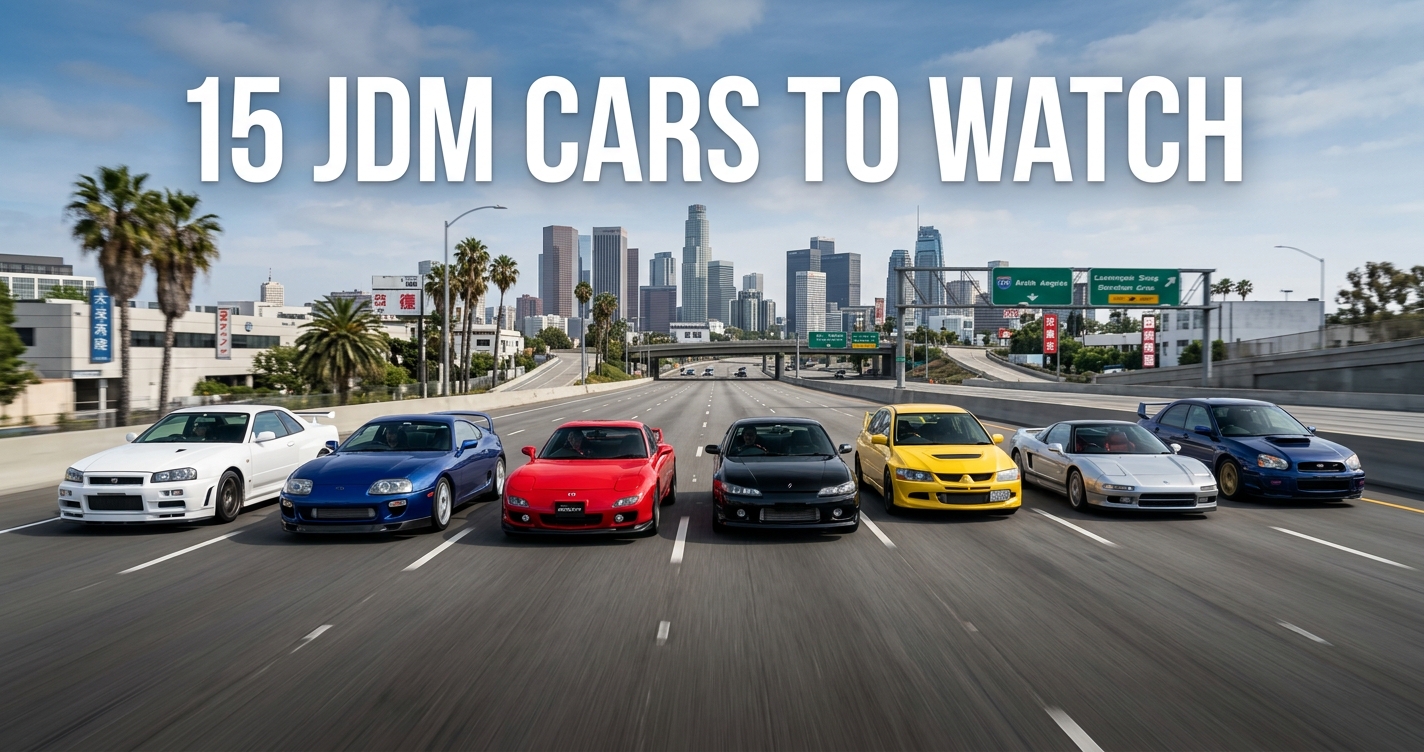
For American performance-car enthusiasts, 2027 is shaping up to be another important year for Japanese imports. The appeal is no longer limited to the familiar Toyota Supra, Nissan Skyline GT-R, or Mazda RX-7. As more Japanese performance cars cross the 25-year federal import threshold, previously inaccessible models are becoming realistic targets for collectors, drivers, and tuning enthusiasts.
The most interesting cars are those combining strong engineering, limited US availability, distinctive Japanese-market specifications, and growing enthusiast demand. Some have already established themselves as collectibles, while others are only now entering the spotlight. The 25-year rule is particularly important because eligibility is determined by the vehicle’s actual manufacture date and month, not simply its model year.
For anyone researching JDM sports cars USA buyers are likely to pursue in 2027, these 15 models deserve close attention.
15 JDM Sports Cars to Watch in 2027
| # | Model | Main attraction | 2027 outlook |
|---|---|---|---|
| 1 | Nissan Skyline GT-R R34 | RB26, AWD, iconic status | Extremely strong |
| 2 | Mazda RX-7 FD3S | Rotary performance | Collector favorite |
| 3 | Toyota Supra A80 | 2JZ tuning potential | Very strong |
| 4 | Honda NSX | Mid-engine engineering | Premium collector |
| 5 | Mitsubishi Lancer Evolution VII | Rally-bred AWD | Rising interest |
| 6 | Nissan Silvia S15 | Lightweight RWD | Major demand |
| 7 | Honda Integra Type R DC5 | High-revving FWD | Growing |
| 8 | Honda Civic Type R EP3 | Driver-focused performance | Strong |
| 9 | Honda S2000 | 9,000-rpm roadster | Established classic |
| 10 | Nissan Fairlady Z / 350Z | V6 RWD performance | Accessible |
| 11 | Subaru Impreza WRX STI | AWD turbo performance | Consistently popular |
| 12 | Mitsubishi Lancer Evolution VI | 4G63 and rally heritage | Collector appeal |
| 13 | Nissan Silvia S14 | RWD tuning platform | Strong drift demand |
| 14 | Toyota MR-S | Lightweight mid-engine layout | Underrated |
| 15 | Toyota Celica GT-Four | Rally heritage | Niche collectible |
1. Nissan Skyline GT-R R34
The R34 remains the headline name in the JDM market. Its RB26DETT twin-turbo engine, ATTESA all-wheel-drive system, and unmistakable styling have made it one of Japan’s most desirable performance cars.
By 2027, more R34 production months will have crossed the 25-year threshold, expanding the pool of legally importable examples. Buyers should pay particularly close attention to production month, originality, mileage, and modifications.
2. Mazda RX-7 FD3S
Few Japanese sports cars have a more distinctive character than the third-generation RX-7. Its compact rotary engine and lightweight chassis provide an experience that conventional piston-engine sports cars cannot easily replicate.
The desirable versions, including later performance-focused variants, are increasingly interesting to collectors.
3. Toyota Supra A80
The fourth-generation Supra remains one of the strongest names in the Japanese performance-car market. The 2JZ-GTE is famous for its strength and tuning potential, but originality is becoming increasingly valuable.
A clean, documented, manual-transmission example can command substantially more attention than a heavily modified car.
4. Honda NSX
The first-generation NSX demonstrated that a Japanese manufacturer could challenge European supercars through precision rather than brute force.
Its naturally aspirated V6, aluminum construction, and mid-engine layout give it lasting collector appeal. Clean examples are increasingly viewed as serious Japanese automotive collectibles.
5. Mitsubishi Lancer Evolution VII
The Evo VII brings rally technology into a more modern package. Its turbocharged four-cylinder and sophisticated all-wheel-drive system make it particularly attractive to drivers who want performance rather than simply showroom rarity.
Early production examples reaching eligibility make this an important model to watch in 2027.
6. Nissan Silvia S15
The S15 is one of the most anticipated additions to the US JDM scene. Its lightweight rear-wheel-drive chassis, turbocharged SR20DET in Japanese-market performance versions, and deep connection to drifting culture make it highly desirable.
American buyers should expect strong competition for clean, unmodified examples.
7. Honda Integra Type R DC5
The DC5 Type R combines Honda’s high-revving naturally aspirated philosophy with a practical front-wheel-drive layout. It is especially appealing to enthusiasts who value steering response, chassis balance, and driver involvement over outright horsepower.
8. Honda Civic Type R EP3
The EP3 Type R has developed a dedicated following because of its compact dimensions, naturally aspirated performance, and aggressive Japanese-market specification.
It may not carry the same investment profile as an R34, but it offers a compelling entry point into the Japanese performance scene.
9. Honda S2000
The S2000’s F20C engine and 9,000-rpm redline remain its defining characteristics. Its combination of rear-wheel drive, manual transmission, compact dimensions, and open-top design gives it an enduring enthusiast following.
Earlier examples also benefit from the continuing expansion of 25-year eligibility.
10. Nissan Fairlady Z / 350Z
The Fairlady Z and 350Z represent a more accessible route into Japanese rear-wheel-drive performance. The VQ-series V6 provides strong performance without the complexity or collector prices associated with some legendary turbocharged models.
For buyers prioritizing driving enjoyment over investment potential, this remains one of the more practical choices.
11. Subaru Impreza WRX STI
The WRX STI combines turbocharged power, rally heritage, and all-wheel-drive traction. Earlier Japanese-market examples are particularly interesting because of their different specifications and motorsport-inspired character.
For enthusiasts living in regions where year-round traction matters, few JDM performance cars offer the same combination.
12. Mitsubishi Lancer Evolution VI
The Evo VI is already a recognized enthusiast car, particularly in special versions associated with Mitsubishi’s rally success. Its compact dimensions and 4G63T engine continue to attract serious drivers and collectors.
13. Nissan Silvia S14
The S14 occupies an important place in Japanese drift culture. Rear-wheel drive, a relatively simple mechanical layout, and extensive aftermarket support make it attractive both as a project car and as a collector vehicle.
14. Toyota MR-S
The MR-S is less prestigious than a Supra or NSX, but its lightweight, mid-engine layout gives it a character that deserves more attention.
For enthusiasts looking for something unusual rather than expensive, the MR-S could become one of the more interesting choices in the market.
15. Toyota Celica GT-Four
The Celica GT-Four connects road-car performance directly to Toyota’s rally heritage. Its turbocharged engine and all-wheel-drive system make it fundamentally different from the typical lightweight Japanese sports coupe.
It is a niche choice, but that scarcity could work in its favor as JDM collectors broaden their interests.
What American Buyers Should Check Before Importing
Buying a desirable Japanese sports car is about more than finding the right model. Before committing to an overseas purchase:
- Confirm the exact manufacture month. The federal 25-year exemption is based on the vehicle’s age, not simply its advertised model year.
- Check originality. Modified engines, non-original body panels, and extensive tuning can affect both value and reliability.
- Review mileage and condition carefully. Low mileage alone does not guarantee a good car.
- Calculate the landed cost. Include the purchase price, auction or exporter fees, inland transportation, ocean freight, customs-related expenses, and state registration costs.
- Consider parts availability. Popular models generally have stronger aftermarket and specialist support in the US.
- Research state requirements. Federal import eligibility does not automatically mean every state has identical registration procedures.
For buyers who want to compare available sourcing options and understand how Japanese vehicles are selected, JDM cars from Japan can be a useful starting point.
Why 2027 Could Be a Significant Year for JDM Imports
The most interesting trend is the continued expansion of the 25-year eligibility window. Cars that were once difficult or impossible for ordinary American enthusiasts to import are gradually entering the market legally, creating new demand for clean examples.
At the same time, collectors are becoming more selective. A genuine factory specification, documented history, desirable transmission, low modification level, and strong mechanical condition can matter just as much as the badge on the hood.
Conclusion
The 2027 JDM market should offer American enthusiasts an unusually broad selection of Japanese performance cars. From the legendary Skyline GT-R R34 and Supra A80 to the emerging appeal of the S15 Silvia, Evo VII, DC5 Integra Type R, and other newly eligible models, the market is moving beyond the traditional icons.
The smartest buyers will not simply chase the most famous name. They will verify eligibility, inspect condition, research specifications, calculate the complete import cost, and prioritize cars with genuine history and desirable factory configurations. That approach will matter even more as demand for Japanese sports cars in the USA continues to mature.

Abdul Samad is a digital marketing enthusiast passionate about SEO, branding, and Japanese car exports. He shares insights through creative online platforms and collaborates with global brands.