Lab Equipment Certification: Why Proper Certification Matters
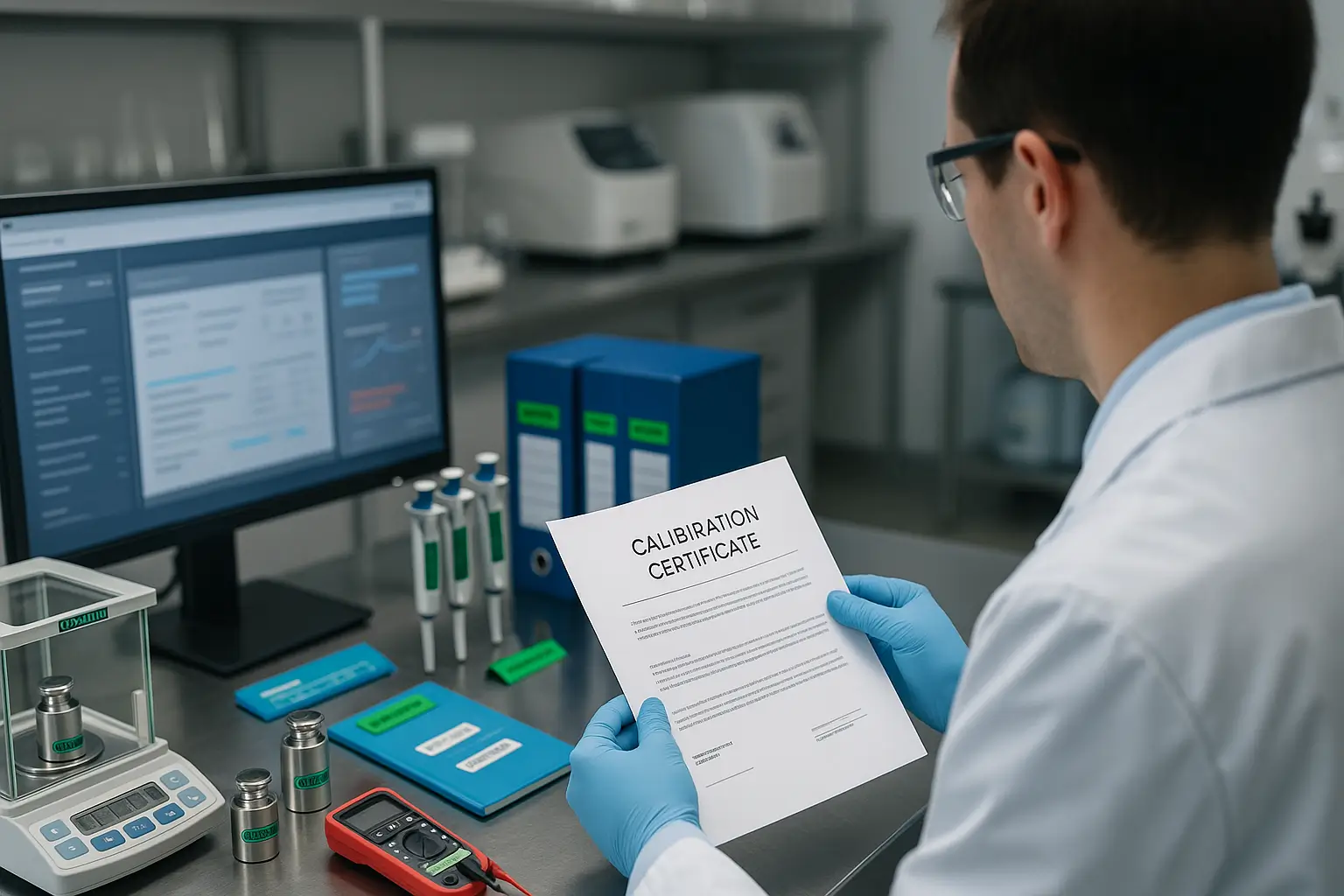
Laboratories depend on equipment to produce measurements, test samples, support research, and make decisions that can affect safety, quality, and compliance. A balance that is slightly inaccurate, a temperature chamber that does not maintain the expected range, or a pipette delivering an incorrect volume can compromise an entire workflow. This is why lab equipment certification is more than an administrative requirement. It provides documented evidence that equipment has been evaluated against defined performance requirements.
Certification also becomes increasingly important as laboratories handle regulated testing, quality-sensitive manufacturing, clinical work, environmental analysis, or research where reproducibility matters. Proper documentation helps laboratory personnel understand whether an instrument is suitable for its intended purpose and whether its performance can be trusted.
What Is Lab Equipment Certification?
Lab equipment certification is the formal process of verifying that laboratory equipment meets specified performance, safety, quality, or regulatory requirements. Depending on the equipment and application, certification may involve inspection, calibration, functional testing, performance verification, electrical safety checks, or a combination of these activities.
It is important to distinguish certification from calibration. Calibration compares an instrument’s measurement performance with a known reference and identifies any deviation. Certification is broader and can document that the equipment or its performance meets particular requirements.
For example, consider a laboratory refrigerator used to store temperature-sensitive materials. Calibration may establish whether its temperature sensor accurately measures the actual temperature. Certification or qualification may go further by documenting that the refrigerator consistently maintains the required temperature range under defined operating conditions.
The exact requirements depend on the equipment, laboratory environment, intended use, and applicable standards.
Why Proper Certification Matters
1. It Improves Measurement Reliability
Laboratory decisions are only as reliable as the measurements behind them. If equipment produces inaccurate or inconsistent results, even a carefully designed testing procedure can produce misleading conclusions.
Certification provides documented evidence that equipment has been assessed appropriately. This is particularly important for instruments such as analytical balances, pH meters, spectrophotometers, centrifuges, incubators, thermometers, and pipettes.
For example, if a pipette is supposed to dispense 1.00 mL but consistently delivers 0.94 mL, a seemingly small difference could affect concentrations, experimental results, or quality-control decisions.
2. It Supports Regulatory and Quality Requirements
Many laboratories operate under formal quality systems. Depending on the industry, organizations may need to demonstrate that equipment is properly maintained, monitored, calibrated, and suitable for its intended use.
Certification records can help demonstrate that an organization follows its documented procedures rather than relying on informal assumptions. During an internal or external audit, being able to produce equipment histories, certificates, calibration records, and corrective-action documentation can make a significant difference.
3. It Protects Sample and Product Integrity
Poorly performing equipment can damage samples, waste materials, and invalidate batches of testing.
Imagine an incubator that is expected to maintain 37°C but periodically reaches temperatures outside its specified range. If samples are affected, the laboratory may have to repeat the work, investigate previous results, and potentially discard valuable materials.
Proper certification and verification help identify these risks before they become expensive problems.
4. It Improves Traceability
A good certification program creates a history for each important piece of equipment. That history can include its identification number, manufacturer, model, testing dates, results, standards used, technician information, and next scheduled service.
This traceability makes it easier to answer practical questions such as:
- When was this instrument last checked?
- Who performed the certification?
- What standards were used?
- Did the equipment pass?
- When is the next evaluation due?
- Was any corrective action required?
A Practical Step-by-Step Certification Strategy
Certification works best when it is treated as an ongoing equipment-management process rather than a one-time event.
Step 1: Create an Equipment Inventory
Start by identifying every instrument that could affect laboratory results or safety.
Record details such as:
- Equipment name
- Manufacturer and model
- Serial or asset number
- Location
- Intended use
- Critical performance requirements
- Certification or calibration status
This inventory becomes the foundation of the equipment-control program.
Step 2: Classify Equipment by Risk
Not every piece of equipment requires the same level of attention.
A simple laboratory refrigerator used for noncritical materials may have different requirements from a temperature-controlled unit holding materials essential to regulated testing.
Consider how equipment failure could affect:
- Safety
- Test results
- Product quality
- Regulatory compliance
- Research validity
- Sample integrity
Higher-risk equipment generally deserves more frequent monitoring and stronger documentation.
Step 3: Define Acceptance Criteria
Before testing equipment, establish what acceptable performance looks like.
For example, a laboratory may specify a particular accuracy or operating range for a balance, temperature-controlled chamber, or dispensing device.
Acceptance criteria should be based on the equipment manufacturer’s specifications, laboratory procedures, applicable standards, and the instrument’s intended use.
Step 4: Perform the Appropriate Testing
Testing should match the equipment’s function.
A balance may require accuracy and repeatability checks. A temperature chamber may require temperature mapping or stability testing. A centrifuge may require verification of speed and operating performance.
The goal is not simply to complete paperwork. The testing should provide meaningful evidence that the equipment performs as required.
Step 5: Document the Results
Certification documentation should clearly identify what was tested and what the results showed.
Avoid vague statements such as “equipment checked.” A useful record should provide enough information for another qualified person to understand what was evaluated and whether it met the acceptance criteria.
Step 6: Establish a Review and Recertification Schedule
Equipment performance can change because of normal wear, environmental conditions, repairs, relocation, or improper use.
Certification intervals should therefore be based on risk, manufacturer recommendations, historical performance, usage, and applicable requirements.
A laboratory should also consider reassessing equipment after major repairs or events that could affect performance.
Common Mistakes and Challenges
One common mistake is treating certification as a paperwork exercise. A certificate is valuable only when the underlying inspection or testing is technically appropriate.
Another problem is using an overly generic schedule. Certifying every instrument at the same interval may be convenient, but it does not necessarily reflect actual risk.
Poor identification is another frequent issue. If equipment records do not clearly connect a certificate to a specific asset, traceability becomes difficult.
Laboratories should also avoid ignoring equipment that has been moved, repaired, modified, or exposed to unusual conditions. Such events can justify additional verification even when the normal certification date has not arrived.
Practical Tips for Better Equipment Control
Keep records centralized. Whether records are digital or paper-based, personnel should be able to quickly determine an instrument’s current status.
Use visible status identification. Labels can indicate whether equipment is certified, due for evaluation, or out of service. Make sure labels do not replace the official records.
Investigate failures immediately. If an instrument fails a certification check, determine whether previous results may have been affected.
Train equipment users. Certification cannot compensate for incorrect operation. Staff should understand equipment limitations, proper handling, and reporting procedures.
Review historical performance. Repeated failures or gradual changes can reveal maintenance problems or indicate that certification intervals need adjustment.
Separate calibration from qualification when necessary. An instrument can be accurately calibrated yet still fail to meet the operational requirements of a particular laboratory process.
Conclusion
Proper lab equipment certification provides confidence that instruments are performing as expected and that their use can be supported by documented evidence. It strengthens measurement reliability, supports quality systems, improves traceability, and helps laboratories identify problems before they compromise important work.
The most effective approach is systematic: inventory equipment, assess risk, define acceptance criteria, perform appropriate testing, document results, and reassess equipment throughout its service life. When certification becomes part of everyday equipment management rather than an occasional compliance task, laboratories gain something more valuable than a certificate: greater confidence in the results their equipment produces.

You may also like