
Custom Printed Tags for Products: Comparing Materials, Finishes, and Customization Options
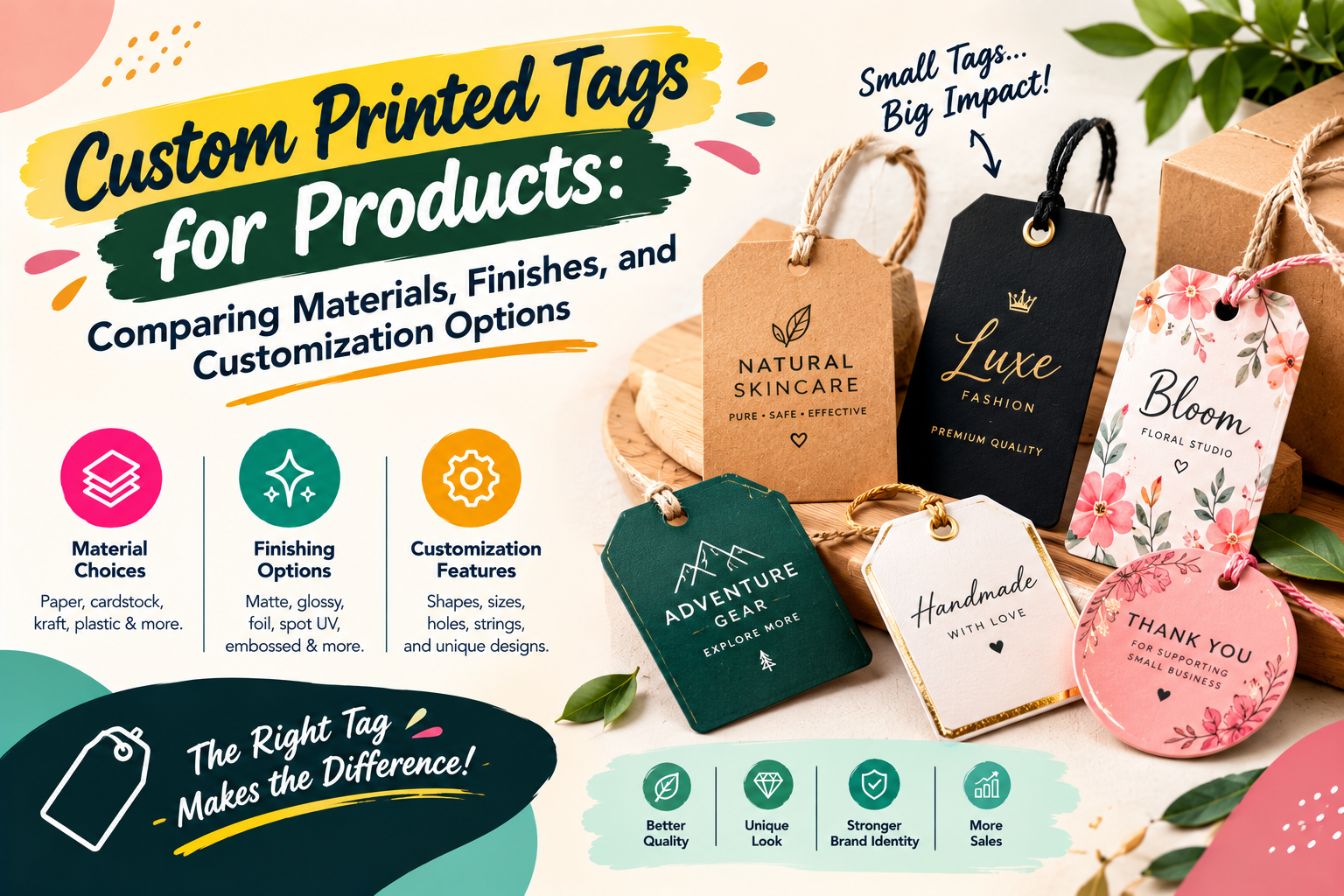
A product may be remembered for its quality, but customers often experience its branding before they experience the product itself. A small printed tag attached to clothing, packaging, handmade goods, accessories, or retail products can quietly communicate a brand’s personality, quality, and attention to detail.
That is why custom printed tags for products are more than simple labels. The material, finish, shape, printing style, and customization details all influence how a product looks and how customers perceive the brand behind it.
With so many options available, choosing the right tag can become surprisingly complicated. Should you go with paper, cardstock, fabric, or a synthetic material? Is a matte finish better than gloss? Would foil stamping add value, or would a simpler design work better? And how much customization is actually useful?
This guide explores those questions by comparing the major material, finishing, and customization options so you can choose product tags that match both your brand identity and practical requirements.
Why Product Tags Deserve More Attention Than They Usually Get
Product tags occupy very little physical space, but they can have a considerable branding role.
A well-designed tag can introduce a logo, display product information, reinforce brand colors, communicate pricing, provide care instructions, or tell a short story about the product. For small businesses and premium brands especially, these details can help turn an ordinary product into a more complete branded experience.
The important point is that good tags are not simply decorative. They need to balance appearance, durability, readability, and purpose.
A luxury clothing brand may benefit from thick textured cardstock and subtle foil detailing, while a handmade soap company might prefer recycled paper with earthy printing. A children’s product may require bright colors and highly readable information, whereas a minimalist accessories brand may achieve more impact through restrained typography and a clean finish.
The best choice depends on what the tag needs to accomplish.
The Material Foundation: What Should Your Tag Actually Be Made From?
The material is one of the first decisions to make because it affects appearance, durability, printing quality, and even the perceived value of the product.
Premium Cardstock for a Strong First Impression
Cardstock is one of the most versatile choices for custom product tags. Its greater thickness compared with standard paper gives tags a more substantial feel and allows designs to maintain their shape.
It works particularly well for:
- Clothing and fashion accessories
- Gift products
- Handmade goods
- Boutique packaging
- Jewelry and lifestyle products
- Retail merchandise
Different weights and textures can create very different impressions. Smooth cardstock provides a clean, contemporary appearance, while textured cardstock can produce a more artisanal or premium feel.
Kraft Paper for Natural and Handmade Branding
Kraft tags are particularly effective for brands that want to communicate simplicity, sustainability, or craftsmanship.
Their natural brown tone creates an organic visual foundation, making them a popular choice for handmade products, coffee-related brands, natural cosmetics, candles, and eco-conscious businesses.
Kraft does not necessarily mean the design has to look rustic. Pairing it with modern typography, a simple logo, or carefully selected ink colors can create a sophisticated contemporary appearance.
Fabric Tags When the Product Itself Calls for Them
For apparel and textile products, fabric tags offer an alternative to traditional hanging paper tags.
Woven and printed fabric labels can be attached directly to garments, bags, towels, hats, and other textile-based products. They are especially useful when information needs to remain attached to the product rather than being removed after purchase.
The choice between woven and printed fabric largely depends on the complexity of the design, the desired texture, and the amount of information being displayed.
Synthetic and Specialty Materials for Demanding Applications
Some products require tags that can tolerate moisture, handling, friction, or other environmental conditions. In those situations, synthetic papers, plastics, waterproof materials, or specialty stocks may be more appropriate.
These materials can be useful for products that may be exposed to:
- Moisture
- Frequent handling
- Outdoor conditions
- Refrigeration
- Oils or spills
- Heavy retail use
The right material should therefore be selected according to the product’s environment, not simply its appearance.
The Surface Tells Its Own Story: Matte, Gloss, and Specialty Finishes
Once the base material has been selected, the finish can change the entire character of a tag.
Matte Finishes for Understated Sophistication
Matte surfaces absorb light rather than creating a strong reflection. This gives tags a softer, more refined appearance and can make small amounts of text easier to read under bright lighting.
Matte finishes work particularly well for:
- Minimalist brands
- Luxury-inspired packaging
- Professional products
- Neutral color palettes
- Modern typography-based designs
They are often a good choice when the brand wants the design to feel polished without looking overly flashy.
Gloss Finishes When Color Needs to Stand Out
Gloss creates a reflective surface that can make colors appear brighter and more vibrant.
This can be useful for colorful product lines, promotional merchandise, children’s products, and designs where strong visual impact is important.
However, highly reflective surfaces can sometimes create glare, especially around small text. The finish should therefore support the design rather than overpower it.
- Soft-Touch Finishes for a More Tactile Experience
Soft-touch coatings are designed to create a smooth, almost velvety surface.
This type of finish can make a tag feel noticeably more premium when someone handles it. It is particularly effective for brands that want the physical experience of their packaging and tags to reinforce a higher-end positioning.
- Textured Finishes That Make the Tag Feel Distinctive
Texture introduces another sensory element. Linen-like, embossed, recycled, or specialty papers can give a tag visual depth even when the printed design itself is simple.
For a minimalist logo, for example, an interesting material texture may provide enough visual character without requiring additional graphics.
- Customization Goes Beyond Adding a Logo
A common mistake is to think of customization as simply printing a company name or logo. Modern product tags can be personalized in many different ways.
- Shape as a Branding Device
A tag does not have to be a standard rectangle.
Rounded corners, circles, arches, custom silhouettes, folded formats, and die-cut shapes can help a product stand apart on a retail display.
The key is restraint. A distinctive shape should make the tag recognizable without making it difficult to attach, read, or handle.
Typography That Matches the Product Personality
Fonts communicate more than information.
A refined serif typeface may suggest heritage or luxury. A geometric sans-serif can feel modern and clean. Handwritten typography may work well for artisan products, while bold display fonts can create a more energetic identity.
Typography should remain readable at the actual size of the tag. A beautiful font loses its value if customers struggle to understand the information.
Color Systems That Create Brand Recognition
Using consistent brand colors across product tags can strengthen visual recognition.
Rather than choosing colors simply because they look attractive individually, consider how they interact with your packaging, website, product photography, and other marketing materials.
A consistent color system can make even a simple tag feel like part of a much larger brand identity.
Variable Information for Different Products
Businesses with multiple products can also customize tags with variable information.
Depending on the product, tags can include:
- Product names
- Sizes
- Prices
- SKU or product codes
- Care instructions
- Materials
- Manufacturing information
- Short brand messages
- QR codes
- Website or social media details
This allows the same overall tag design to serve different products while keeping the branding consistent.
When Finishing Techniques Become Part of the Design
Special printing and finishing techniques can make certain elements of a tag more noticeable.
Foil Details for Controlled Luxury
Foil stamping can add metallic accents in gold, silver, copper, or other finishes. Instead of covering the entire tag, brands can use foil selectively on logos, borders, names, or small design elements.
Used carefully, foil can create a premium appearance without making the tag visually overwhelming.
Embossing and Debossing for Physical Dimension
Embossing raises selected elements from the surface, while debossing presses them into the material.
These techniques are especially effective for simple logos, monograms, and typography because the physical dimension itself becomes part of the branding.
They can also work beautifully when combined with minimal printing.
Rounded Corners and Die-Cutting for Visual Personality
Finishing is not limited to surface treatments. Cutting and shaping can transform a basic tag into a distinctive brand element.
For example, a children’s brand might use playful shapes, while a premium accessories company could use a slim custom silhouette.
Choosing Customization Based on the Product, Not the Trend
It can be tempting to use every available customization technique. More effects, however, do not automatically mean a better tag.
A useful approach is to ask three questions:
- What does the customer need to know?
- This determines the information that belongs on the tag.
- What should the customer feel?
- This influences the material, colors, typography, and finish.
- Where and how will the tag be used?
This determines its required durability, size, attachment method, and material.
Once these questions are answered, customization becomes purposeful rather than decorative.
A Practical Comparison of Tag Options
Different combinations suit different branding goals.
Tag Option Best For Main Advantage Consideration
Smooth Cardstock General retail products Versatile and professional Less distinctive without finishing
Textured Cardstock Premium and artisan brands Strong tactile appeal Texture may affect fine details
Kraft Paper Handmade and eco-focused products Natural visual character Limited color appearance on some kraft stocks
Fabric Tags Apparel and textiles Durable and integrated into products Not ideal for large amounts of information
Synthetic Materials Moisture-prone products Greater durability May feel less traditional
Matte Finish Minimal and premium branding Refined appearance Can show handling marks depending on material
Gloss Finish Bright, colorful designs Strong visual impact Can create glare
Foil Accents Luxury-oriented products Metallic premium effect Best used selectively
Embossing/Debossing Logos and premium branding Adds physical dimension More suitable for simple designs
The Attachment Method Matters More Than You Might Expect
A beautiful tag can still look wrong if it is attached poorly.
String, twine, ribbon, plastic fasteners, adhesive backing, and direct sewing are among the common approaches. The attachment method should complement both the product and the tag.
For example, natural twine can reinforce an organic handmade aesthetic, while a clean synthetic fastener may make more sense for mainstream retail apparel.
The placement also matters. A tag should remain visible enough to perform its branding role without interfering with how the customer handles, wears, or opens the product.
Sustainability Is Becoming Part of the Design Decision
Material selection increasingly involves more than appearance and cost.
Brands may consider recycled content, recyclable materials, reduced coatings, responsible paper sourcing, and whether unnecessary components can be eliminated.
Sustainable design does not mean every tag must look plain or unfinished. A thoughtfully designed recycled-paper tag, for example, can become a strong visual element of the brand rather than simply a sustainability statement.
The goal should be to choose materials responsibly while still meeting the product’s functional requirements.
The Most Effective Tags Balance Three Different Experiences
A successful custom tag works on three levels.
- Visual experience:
The tag should immediately look connected to the brand.
- Tactile experience:
The material and finish should feel appropriate for the product’s positioning.
- Informational experience:
The customer should be able to find important information without unnecessary clutter.
If one of these areas dominates the others, the result can feel unbalanced. A beautiful tag with unreadable information is not effective. Likewise, a highly informative tag that looks generic may miss an important branding opportunity.
How to Choose the Right Combination for Your Brand
Instead of beginning with a printing technique, begin with your brand positioning.
If your products are luxury-focused, consider heavier stock, restrained typography, matte surfaces, soft-touch coatings, foil, or embossing.
If your brand is natural or handmade, kraft paper, recycled stocks, earthy colors, and simple typography may communicate the right message.
Your products are modern and minimalist, clean shapes, generous spacing, matte finishes, and limited colors can create a polished result.
If your products are colorful and playful, vibrant printing, unusual shapes, and glossy finishes may provide greater impact.
If your products need high durability, prioritize materials and finishes that can withstand the environment in which the tags will be used.
The best combination is not necessarily the most expensive one. It is the one that makes sense for the product, customer, and brand.
Common Mistakes That Can Weaken Custom Product Tags
Even a professionally printed tag can become ineffective when the design process overlooks practical details.
Some common mistakes include:
- Trying to fit too much information onto a small surface
- Choosing decorative fonts that reduce readability
- Using finishes that conflict with the brand identity
- Selecting materials without considering product conditions
- Making the tag visually disconnected from the rest of the packaging
- Adding too many colors or finishing effects
- Ignoring attachment and placement
- Designing for appearance without considering actual production requirements
A strong tag is usually the result of careful editing rather than adding more elements.
Final Thoughts
Custom printed tags for products can be small, but their role in branding is anything but insignificant. The right material can establish the foundation, the right finish can influence how the tag feels, and thoughtful customization can turn basic product information into a memorable brand experience.
There is no universal combination that works for every business. Cardstock may be ideal for one product while fabric, kraft paper, or a durable synthetic material may make more sense for another. Similarly, matte, gloss, foil, embossing, and specialty finishes should be chosen according to the brand’s personality and the customer’s expectations.
Ultimately, the strongest product tags are not the ones with the most features. They are the ones where material, finish, design, information, and brand identity work together naturally.
When those elements are aligned, a simple printed tag can become a subtle but powerful part of the product experience—one that customers notice, remember, and associate with the quality of the brand.
Visit Us: https://ibexpackaging.com/custom-tags/

You may also like

Affordable Double Divan Bed for Comfortable and Stylish Bedrooms
Food Wrapping Paper Trends Every UK Business Should Know
