Does PRP Hair Treatment Support Fuller Hair?
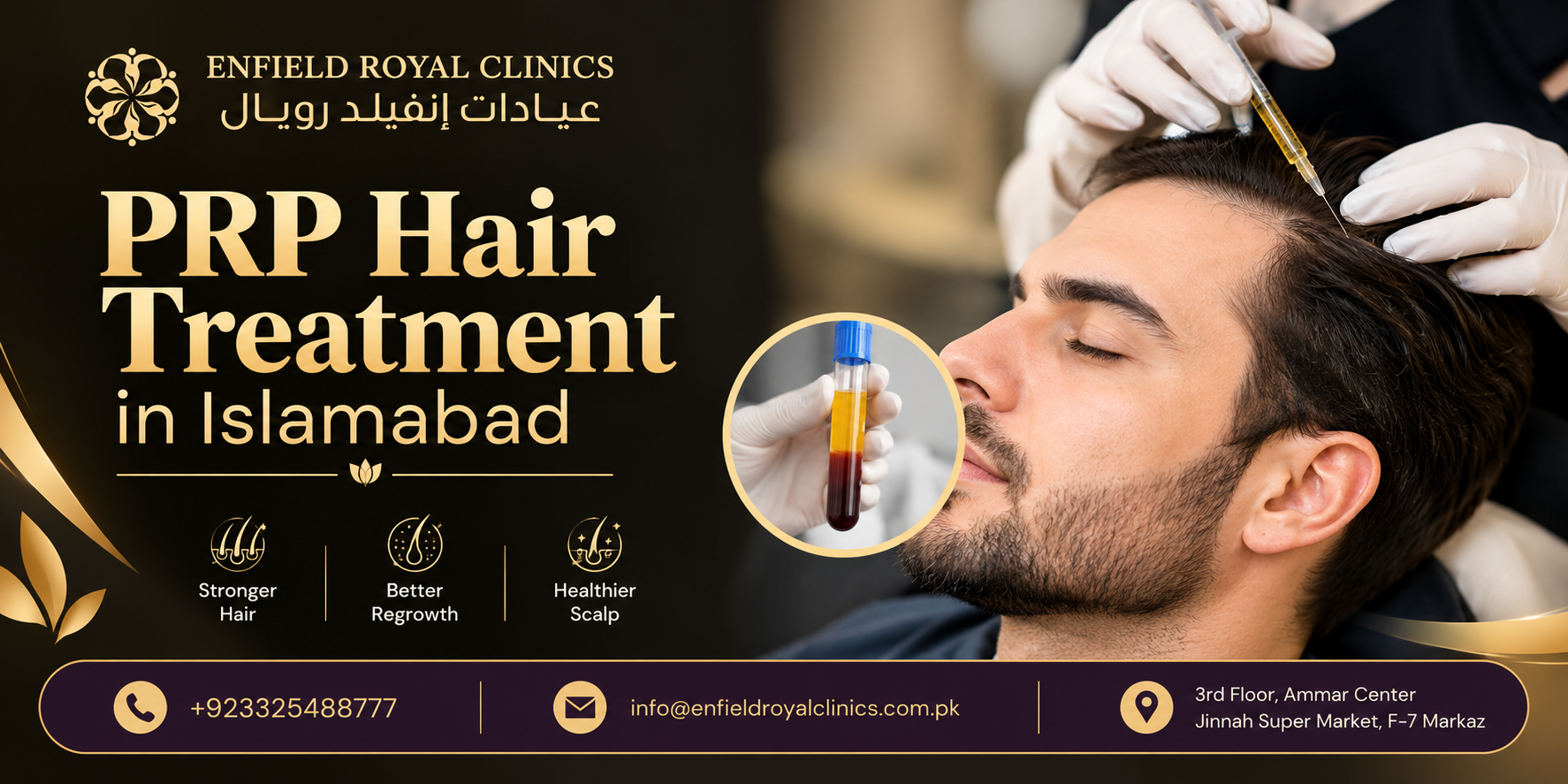
Yes, PRP Hair Treatment may support fuller-looking hair by helping strengthen weakened hair follicles and improving the environment around existing follicles. For people experiencing thinning hair, PRP can be used as a non-surgical treatment to support hair density and thickness. The effectiveness depends on the cause of hair loss, follicle health, and individual response.
People researching PRP Hair Treatment cost in Islamabad often want to know whether the treatment can actually make the hair appear fuller. PRP does not create completely new hair follicles or work like a hair transplant. Instead, it uses concentrated components from the patient’s own blood and delivers them into targeted areas of the scalp to support existing follicles.
How Does PRP Support Fuller-Looking Hair?
PRP stands for platelet-rich plasma. During the treatment, a small blood sample is collected and processed to concentrate platelets and growth-related components. The prepared plasma is then injected into selected areas of the scalp.
These components may help support the activity of weakened follicles. When follicles remain active but produce thinner or weaker strands, improving their surrounding environment may help the hair become stronger and appear denser over time.
The goal is not an instant increase in hair volume. Instead, PRP works gradually as the natural hair growth cycle progresses.
Can PRP Improve Hair Thickness?
Hair may appear thinner when individual strands become fine or when fewer hairs remain in a particular area. PRP may help support follicles that are still capable of producing hair, potentially improving the thickness and quality of growing strands.
A fuller appearance may become noticeable when:
- Existing hairs become stronger and thicker
- Hair shedding is reduced
- Weak follicles receive additional support
- More hairs remain in the active growth phase
- Overall scalp and follicle health improves
However, results differ between individuals. PRP is generally more useful when hair thinning is identified before follicles become permanently inactive.
Which Types of Hair Loss May Benefit From PRP?
PRP may be considered for certain forms of thinning hair, particularly when follicles are weakened rather than completely lost. It can be used for areas such as the hairline, crown, or general scalp thinning, depending on the individual’s condition.
A treatment plan usually considers the underlying cause of hair loss. Genetic hair loss, stress-related shedding, nutritional issues, hormonal changes, and other conditions can affect hair density in different ways.
For this reason, an assessment before treatment is important. Identifying the cause can help determine whether PRP is an appropriate option and whether additional treatment may be needed.
How Many PRP Sessions Are Needed for Fuller Hair?
PRP usually requires more than one session when the goal is to improve hair density. The exact number depends on the extent of thinning, follicle condition, treatment response, and the overall plan recommended for the individual.
Hair growth is naturally slow, so several sessions may be spaced over a period of weeks or months. Follow-up sessions may also be considered to help maintain improvements.
The treatment plan should be based on the patient’s needs rather than a fixed number of sessions for everyone. Some individuals may respond more noticeably than others.
When Can Fuller Hair Become Noticeable?
PRP does not produce immediate hair growth. The scalp and follicles need time to respond, and newly growing hair must pass through its natural growth cycle.
Some people may first notice reduced shedding or subtle changes in hair quality. More noticeable improvements in thickness and density can take several months.
Factors that can influence the timeline include:
- Severity and duration of hair thinning
- Cause of hair loss
- Age and genetics
- Condition of the hair follicles
- Scalp health
- Nutritional status
- Number and consistency of treatment sessions
- Individual response to PRP
Realistic expectations are important because gradual improvement is more typical than an immediate transformation.
Does PRP Work on Completely Bald Areas?
PRP is designed to support existing or weakened follicles. If an area has been completely bald for a long time and the follicles are no longer active, PRP may have limited ability to restore hair there.
This is an important distinction between PRP and hair transplantation. A transplant involves moving hair follicles from one area of the scalp to another, while PRP focuses on supporting the follicles that are already present.
For individuals with advanced hair loss, PRP may sometimes be considered as part of a broader hair restoration plan rather than as a standalone solution.
What Can Help Maintain Fuller-Looking Hair After PRP?
Good scalp and hair care can complement a PRP treatment plan. Maintaining adequate nutrition, managing conditions that contribute to hair loss, protecting the scalp, and following recommended aftercare may support overall hair health.
Patients should also avoid expecting PRP to overcome every cause of hair loss. If an underlying issue continues to affect the follicles, addressing that issue may be important for maintaining hair quality.
For anyone comparing PRP Hair Treatment cost in Islamabad, it is useful to consider more than the session cost. The overall treatment plan, number of sessions, follow-up requirements, and individual hair-loss condition can all influence the total treatment journey.
FAQs
1. Can PRP make thin hair look fuller?
PRP may help thin hair appear fuller by supporting weakened follicles and potentially improving the thickness of existing hair strands. Results vary from person to person.
2. Does PRP create new hair follicles?
No. PRP does not create new hair follicles. It is intended to support existing follicles that are still active or weakened.
3. How long does PRP take to improve hair thickness?
Hair thickness generally improves gradually. Some changes may become noticeable within a few months, although the timeline depends on the individual’s hair growth cycle and response.
4. Is PRP suitable for everyone with hair loss?
No. PRP may not be equally effective for every type or stage of hair loss. An assessment can help determine whether the follicles are suitable for this type of treatment.
For more information visit Enfield royal clinic in islamabad

You may also like