
Gates Won’t Open: What to Check Yourself in 5 Minutes and When to Call a Repairman
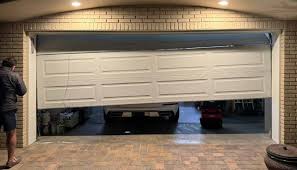
Half of the “gate won’t open” calls end with a simple cause—one the customer could have solved themselves in five minutes. The other half involve malfunctions, where attempting to repair the problem themselves is dangerous. Below, we’ll show you how to tell the difference.
Step 1: Is there power?
Start with the most common issue. Check if the indicator light on the control unit is on and if the circuit breaker in the panel has tripped. Gates are a heavy load, and the circuit breaker often trips not on its own, but due to moisture in the wiring after rain or washing the area.
- The indicator doesn’t light at all – there is no power; look for the circuit breaker.
- The indicator is on, but the drive is silent – there is power; the problem is in the controls or mechanics.
- The circuit breaker trips immediately after being turned on— don’t reset it. This is a short circuit, usually in the drive or cable. Repeated attempts will damage the circuit board.
Step 2. Remote control or automation itself
Check the simplest thing: press the button on the control unit itself or on the wall post, if there is one. If the gate opens, the problem is with the remote controls, not the gate itself.
- If one of the remotes doesn’t work, it’s almost always the battery that’s dead. It takes a minute to replace and costs pennies.
- All the remote controls stopped working at once—the pairing got lost or the radio receiver failed. A Garage Door Repair Dubai technician can restore the pairing in one visit.
- The remote only works close to the gate—the antenna has degraded or been damaged by interference. This is a common occurrence after a thunderstorm.
Step 3: Photocells
This is the number one reason for “gates open but won’t close.” Photocells—two sensors at the edges of the opening—monitor to ensure the gate doesn’t close on a person or vehicle. If the beam is blocked or disrupted, the automation considers the opening occupied and prevents closing. This isn’t a malfunction, but a safety feature, and it’s functioning properly.
- Wipe the sensor lenses clean of dirt, dust, snow, ice, and cobwebs. In warehouses, they often become caked with dust within a few months.
- Check to see if there is anything in the opening: a pallet, a box, forgotten equipment.
- Check for misalignment—the sensors should be aligned precisely with each other. They are often hit by the forklift.
Step 4. Mechanics
This is where the things you can check yourself end, and the work of a mechanic begins. Signs of mechanical problems:
- The gate moves jerkily and skews. The rollers and guides are worn out, or the door leaf is unbalanced.
- A humming noise from a drive without movement. Most often, a gearbox pinion has sheared or the chain has broken.
- The gate traveled part of its way and stopped. The obstacle protection system was triggered: either there was an actual obstruction in the guide, or the drive was overloaded due to a misalignment.
- Visible deformation after an impact. The forklift hit the track or guide rail—the geometry needs to be restored; otherwise, the rollers and drive will be damaged.
What not to do
- Tighten the adjusting screws on the torsion shaft. The spring is under a load of several hundred kilograms, and if the wrench slips, it will damage the spring.
- Pull the canvas manually if it’s too tight. This will tighten the rollers and bend the guides.
- Cock the knocked-out machine gun several times in a row.
- Lubricate everything. The rubber seals and some guides swell and seize up even more from the oil.
When to call an emergency
Don’t wait for a scheduled visit if: the gate is warped, you hear a grinding noise, you see broken cables or a broken spring, the gate is moving on its own, or the opening is the only entrance to the property and is blocked. In all these cases, Garage Door Repair Dubai services may be needed urgently, as every hour of downtime costs more than the repair.

You may also like

Custom Software Development in Houston | Digital Solutions
How Disco Music Lights Create an Amazing Party Atmosphere
