
How Fire Rescue Drones Support Fire Safety and Emergency Response
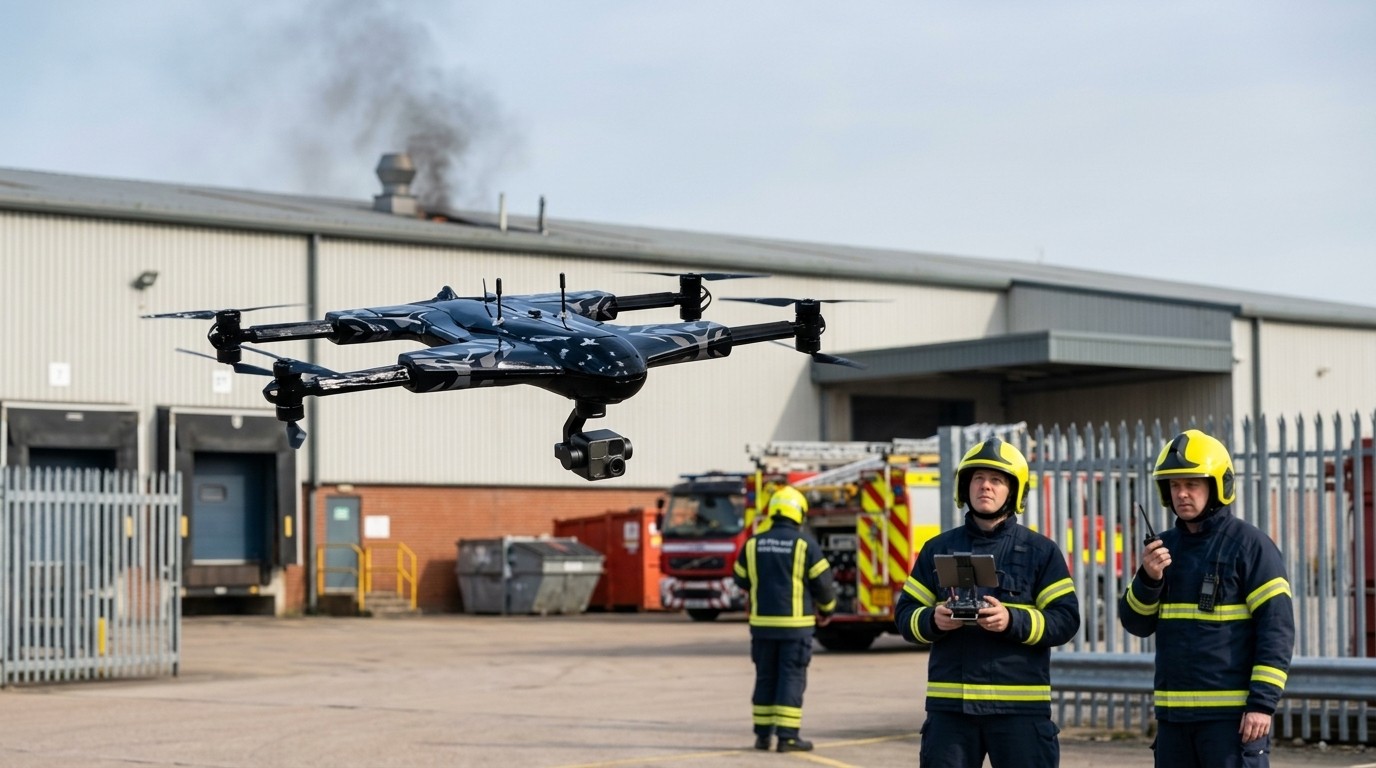
Fire safety involves more than installing alarms, providing extinguishers and displaying evacuation routes. Businesses also need to understand potential hazards, prepare for emergencies and ensure that people know how to respond when an incident occurs.
Technology is increasingly helping emergency services assess dangerous situations and make informed decisions. One example is the use of fire rescue drones, which can provide aerial images, identify potential hazards and help response teams understand conditions at an incident.
Although drones cannot replace trained firefighters or established safety procedures, they can provide valuable information when visibility, access or rapidly changing conditions make an emergency difficult to assess.
For businesses and workplace safety professionals, understanding how drones support emergency response also highlights the importance of effective fire planning, risk awareness and practical safety training.
What Are Fire Rescue Drones?
Fire rescue drones are unmanned aircraft used to support firefighting, rescue operations and incident assessment. Depending on their equipment, they can capture live aerial footage, photograph damaged structures and provide thermal images showing differences in surface temperature.
Unlike ground-based observations, drones can offer an overhead perspective of buildings, industrial facilities and outdoor areas. This may help emergency teams identify hazards that are difficult to recognise from street level.
Some emergency response drones carry thermal cameras, while others use conventional cameras to provide detailed visual information. The usefulness of either system depends on the incident, operating conditions and the experience of the personnel interpreting the images.
Their main purpose is to improve situational awareness, helping trained responders decide where to concentrate attention and how to approach potentially dangerous areas.
How Drones Support Fire Incident Assessment
Providing a Clearer Aerial View
During a fire, smoke, building layouts and restricted access can make it difficult to understand the full extent of an incident.
Drones can provide aerial views of rooftops, surrounding buildings, access routes and affected outdoor spaces. This wider perspective may help incident commanders assess how a fire is developing and identify areas requiring closer attention.
For example, at a large warehouse, aerial footage could help responders examine roof conditions, locate visible smoke and assess whether nearby structures appear threatened.
This information can complement observations from firefighters on the ground, supporting a more complete understanding of the situation.
Identifying Heat Hotspots with Thermal Cameras
Thermal imaging drones use specialised cameras to detect infrared radiation and display differences in apparent surface temperature.
During a fire incident, thermal images may help identify unusually hot areas on roofs, building exteriors or surrounding ground. They can also assist with monitoring areas where heat remains after visible flames have reduced.
At an industrial site, for instance, thermal imaging may help responders identify a heated section of equipment or a roof area that requires further investigation.
However, thermal cameras have limitations. They cannot reliably see through walls, and smoke, reflective surfaces, distance and environmental conditions can affect interpretation. A hotspot does not automatically confirm the presence of flames.
Thermal information must therefore be assessed alongside other observations and professional judgement.
Assessing Difficult-to-Access Areas
Some fire incidents involve locations that are unsafe or impractical to inspect immediately.
These might include damaged rooftops, elevated structures, large storage yards or areas close to potentially unstable buildings.
Using drones for fire safety assessments during an incident can allow responders to examine certain hazards remotely before deciding whether personnel should approach.
This does not eliminate the danger, but it may reduce the need for unnecessary exposure during an initial assessment.
Improving Firefighter Safety and Emergency Decisions
Firefighters often work in unpredictable environments where conditions can change quickly. Limited visibility, falling debris, extreme heat and structural damage can all increase operational risks.
As a form of firefighter safety technology, drones can provide additional information to support decisions about access, positioning and incident priorities.
For example, aerial footage may help emergency teams:
- Identify potentially obstructed access routes.
- Observe visible damage to roofs or external structures.
- Monitor fire development near neighbouring buildings.
- Assess whether outdoor hazards are spreading towards other areas.
- Review conditions before sending personnel into difficult-to-access locations.
These observations can help incident commanders plan operations and reassess risks as circumstances change.
Importantly, drone footage is only one source of information. It cannot establish that a structure is safe to enter or replace direct assessments by qualified emergency personnel.
Practical Applications in Different Workplaces
The potential benefits of drones in emergency response become clearer when considering different workplace environments.
Industrial Sites and Manufacturing Facilities
Industrial premises may contain complex machinery, combustible materials, external storage areas and restricted-access zones.
During an incident, aerial imagery could help responders understand the arrangement of affected areas and identify nearby equipment or buildings that may require attention.
However, information about hazardous substances, site layouts and emergency isolation procedures must still come from reliable site records and responsible personnel.
Warehouses and Commercial Buildings
Large warehouses and commercial premises can present challenges because of their size, roof design and multiple access points.
A drone may help emergency teams observe smoke movement, inspect external damage and monitor neighbouring structures.
For business owners, these examples reinforce the importance of maintaining accessible site plans, clearly marked exits and suitable emergency arrangements.
Outdoor Fires and Storage Areas
Fires involving vegetation, outdoor materials or storage compounds may spread across areas that are difficult to monitor from one position.
Aerial footage can help responders observe the visible fire perimeter, nearby exposures and changes in conditions.
Where thermal imaging is available, it may also assist in identifying areas of residual heat. Nevertheless, changing winds and environmental conditions can quickly alter the situation.
Connecting Drone Technology with Workplace Fire Safety Planning
Although drones are mainly operated by trained personnel during emergency incidents, their applications offer useful lessons for everyday workplace preparedness.
Effective fire safety starts long before an emergency occurs.
Businesses should ensure that their fire risk assessments identify relevant hazards, people at risk and appropriate control measures. Emergency plans should also consider evacuation arrangements, escape routes, alarm systems and communication responsibilities.
Workplace fire safety training helps employees recognise hazards, respond appropriately to alarms and understand their responsibilities during an evacuation.
Regular drills can reveal practical problems, such as obstructed exits, unclear assembly arrangements or difficulties accounting for personnel.
Drones do not replace these essential measures. Instead, they illustrate why accurate information, effective communication and timely decision-making matter during an emergency.
Where appropriate, organisations operating large or complex premises may also consider how site information could assist responding emergency services.
Limitations and Responsible Drone Use
Despite their potential advantages, drones are not suitable for every fire incident.
Several practical and regulatory factors must be considered.
Weather and visibility: Strong winds, heavy rain, smoke and extreme conditions can affect flight safety, camera performance and the quality of information collected.
Battery life: Most drones have limited operating times. Extended incidents may require battery changes, additional equipment or alternative observation methods.
Operator competence: Safe operation requires suitable training, practical experience and an understanding of the operating environment. Interpreting thermal imagery also requires appropriate knowledge.
Privacy and data protection: Aerial cameras may capture employees, members of the public or neighbouring properties. Organisations must consider privacy, lawful data handling and relevant UK data protection requirements.
Aviation regulations: Drone operations in the UK are subject to Civil Aviation Authority requirements, including rules concerning airspace, operator responsibilities and flight restrictions. Emergency activity does not automatically remove these obligations.
Drones must also be coordinated with emergency services to avoid interfering with firefighting operations or other aircraft.
These limitations demonstrate why drone deployment should be carefully planned rather than treated as a universal solution.
Why Professional Fire Safety Training Still Matters
Technology can improve the information available during an emergency, but people remain central to workplace safety.
Employees need to understand how fires can start, how to raise the alarm and how to evacuate safely. Designated fire marshals require suitable instruction to carry out their responsibilities, while first aid training can help appointed personnel provide appropriate assistance within their competence.
Professional fire safety training supports these responsibilities by developing practical awareness and reinforcing established procedures.
For employers, combining suitable training, regular risk assessments and effective emergency planning provides a more reliable foundation for preparedness than relying on technology alone.
Frequently Asked Questions
Can fire rescue drones extinguish fires?
Most fire rescue drones are used for observation, monitoring and incident assessment rather than extinguishing fires. Specialist firefighting drone systems exist, but their capabilities depend on their design and operating conditions. Professional firefighting teams remain essential.
Can thermal imaging drones detect fire through walls?
No. Thermal cameras generally measure infrared radiation from visible surfaces. They may reveal unusual surface temperatures, but they cannot directly see flames or people through solid walls.
Are drones suitable for every workplace fire emergency?
No. Their suitability depends on the location, weather, airspace restrictions, available equipment and operational risks. Deployment should be assessed and coordinated by competent personnel.
Do businesses need drones to meet UK fire safety requirements?
No. There is no general UK workplace fire safety requirement for businesses to own drones. Employers and other responsible persons must meet applicable fire safety duties, including suitable risk assessment, preventive measures, emergency arrangements and appropriate staff training.
Conclusion
Fire rescue drones can provide useful aerial and thermal information during fire incidents, helping emergency teams assess hazards, monitor changing conditions and make more informed operational decisions.
Their value lies in supporting trained responders, not replacing their expertise.
For workplaces, the wider lesson is that effective emergency response depends on preparation, clear procedures, reliable information and competent people. Appropriate fire safety training, regular risk assessments and well-practised evacuation plans remain essential to protecting employees, visitors and business premises.
