
Machine Feet Adjustable: Choosing the Right Support for Equipment
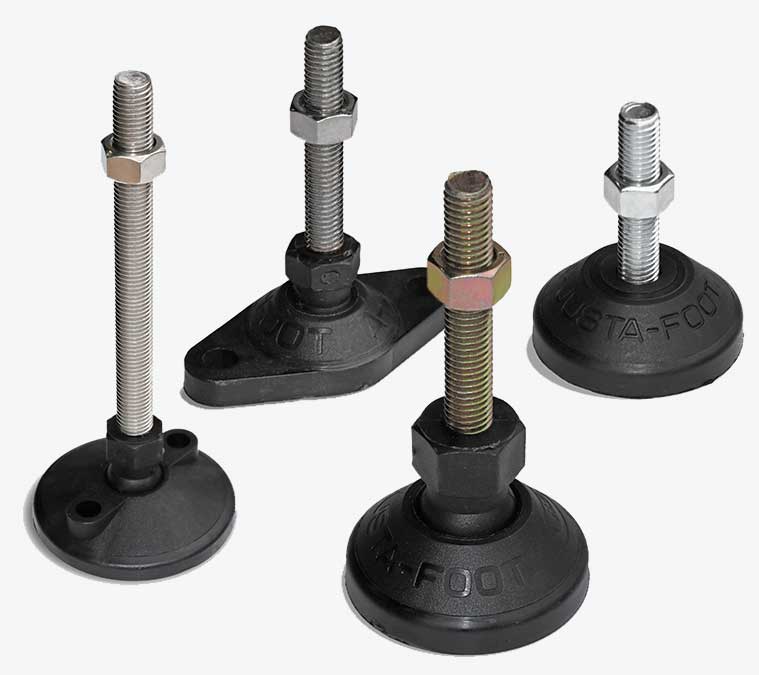
Industrial equipment rarely performs at its best when it sits on an uneven, unstable, or poorly supported surface. Even a small height difference between mounting points can create unwanted vibration, alignment problems, excessive noise, and premature wear. For machinery that needs precise positioning, the support system underneath the equipment can be just as important as the machine itself.
This is where machine feet adjustable can provide a practical solution. Adjustable machine feet allow operators to compensate for uneven floors, establish the correct working height, and stabilize equipment without relying on improvised shims or temporary supports. Choosing the right type, however, requires more than simply selecting a foot that fits the mounting hole.
Understanding Adjustable Machine Feet
Adjustable machine feet are mechanical supports designed to carry equipment while allowing the height, angle, or position of the machine to be fine-tuned. They typically consist of a threaded stud or stem combined with a base or pad. Turning the threaded section changes the distance between the equipment and the floor.
These components are commonly used on manufacturing machinery, workbenches, conveyors, packaging equipment, food-processing systems, laboratory equipment, and commercial fixtures.
The primary purpose is stability. A machine with four or more mounting points may not naturally distribute its weight evenly because floors are rarely perfectly level. Adjustable feet make it possible to compensate for those variations and create a more stable foundation.
They can also help with sanitation, vibration control, and equipment alignment, depending on the design and materials selected.
How to Choose the Right Support
Selecting the correct adjustable foot should start with the operating conditions rather than appearance or price. A foot that works well on a light-duty workbench may be completely unsuitable for heavy industrial machinery.
1. Determine the Required Load Capacity
Calculate the total weight of the equipment and consider how that weight is distributed across the mounting points.
For example, imagine a machine weighing 2,000 pounds and supported by four feet. A simple calculation gives an average static load of 500 pounds per foot. However, choosing feet rated for exactly 500 pounds would leave little safety margin.
Weight can shift during operation, especially when machinery contains moving components. A better approach is to consider uneven loading and dynamic forces when selecting the load rating.
Also check whether the manufacturer’s load rating refers to a static or dynamic capacity. These ratings are not interchangeable.
2. Measure the Required Adjustment Range
Determine how much height adjustment is actually needed before purchasing the feet.
If a machine needs only minor leveling, a short threaded stem may be sufficient. Equipment installed on an irregular floor may require a longer adjustment range.
Avoid selecting an unnecessarily long stem simply because it offers more adjustment. Excessive extension can reduce rigidity and may increase the leverage applied to the mounting point.
3. Consider the Mounting Configuration
Adjustable feet are available with different thread sizes, stem lengths, mounting arrangements, and base designs.
Check the existing mounting holes carefully. Important measurements include:
- Thread diameter
- Thread pitch
- Stud length
- Base diameter
- Overall adjustment range
- Mounting-hole dimensions
A foot that looks compatible may still have the wrong thread pitch or insufficient clearance.
4. Match the Material to the Environment
Environmental conditions have a major effect on service life.
Stainless steel is often appropriate for wet, corrosive, or washdown environments. This makes it useful in food processing, pharmaceutical facilities, commercial kitchens, and other areas where frequent cleaning is expected.
Zinc-plated or coated steel may be appropriate for general industrial environments where corrosion exposure is moderate.
For demanding applications, consider not only the material of the stem but also the base, fasteners, and any locking components. The weakest corrosion-resistant component can become the eventual failure point.
5. Choose the Correct Base Design
The base determines how the machine interacts with the floor.
A broad base distributes weight over a larger area and can be useful on floors where concentrated loads are undesirable. Rubber or elastomeric bases may improve grip and help reduce vibration transmission.
Swiveling or articulated feet can be particularly useful when the floor is sloped or uneven. Instead of forcing the machine to sit at an angle, the foot can adjust its contact angle while maintaining a stable connection.
Common Mistakes or Challenges
One of the most common mistakes is selecting machine feet based only on dimensions. Physical fit is important, but it does not guarantee that the support will perform correctly under actual operating conditions.
Ignoring Dynamic Loads
A machine may weigh 1,000 pounds while stationary but generate considerably greater forces during operation. Pumps, motors, presses, cutting equipment, and rotating machinery can introduce vibration and dynamic loads.
Always consider what happens when the equipment starts, stops, accelerates, or experiences an uneven operating cycle.
Using Improvised Shims
Shims can temporarily compensate for an uneven surface, but they are not always an appropriate long-term solution. Loose or poorly fitted shims can shift, corrode, or create unstable contact points.
Adjustable feet provide controlled adjustment and make future leveling easier.
Failing to Lock the Adjustment
An adjustable foot that is not secured can gradually change position because of vibration. Over time, this may cause the machine to become uneven again.
Where the application requires it, use locking nuts or another appropriate locking mechanism to prevent unwanted movement.
Choosing Vibration Isolation Without Considering Stability
Soft rubber or elastomeric materials can reduce vibration transmission, but excessive flexibility can create another problem. A machine that moves too much during operation may become less accurate or less safe.
The goal is not simply to maximize vibration absorption. The support must provide an appropriate balance between isolation and stability.
Practical Tips for Installation and Maintenance
Before installation, clean the floor and mounting surfaces. Dirt, debris, paint buildup, or damaged flooring can affect the final level of the equipment.
Install all feet loosely at first, then gradually adjust them while checking the machine with a reliable level. On larger equipment, work systematically from one support point to another rather than making large adjustments at a single location.
After leveling, verify that the equipment sits firmly on every support point. There should not be a situation where one foot carries most of the load while another barely contacts the floor.
For machinery that produces substantial vibration, check the adjustment after the equipment has operated under normal conditions. Initial installation may appear correct, but vibration can reveal problems that are not obvious when the machine is stationary.
Regular inspections should include checking for corrosion, damaged threads, loose locking nuts, cracked bases, and changes in machine level. In harsh environments, inspection intervals may need to be shorter.
Expert Recommendations
Treat adjustable feet as part of the machine’s support system, not as an inexpensive accessory. Start by understanding the equipment’s weight, movement, operating environment, required height, and floor condition.
For a precision machine in a clean indoor facility, accurate leveling and rigid support may be the highest priorities. For a food-processing machine, corrosion resistance, washdown compatibility, and hygienic design may matter more. For a vibrating pump or motor, stability and vibration management deserve greater attention.
When replacing existing feet, document the original dimensions and installation height before removal. This makes it easier to select replacements and return the equipment to its previous operating position.
Conclusion
The right adjustable machine feet can improve equipment stability, leveling, alignment, and long-term reliability. The best choice depends on more than thread size: load capacity, adjustment range, material, base design, floor conditions, vibration, and operating environment all need to be considered.
By evaluating these factors before installation and checking the supports regularly afterward, equipment owners can avoid common leveling problems and create a more reliable foundation for their machinery.

You may also like

A Guide to Visas That Require a Business Plan for Immigration

How Does Limo Service Make Travel More Comfortable
