Online Gaming PC: Understanding Virtual Desktop Rental and Cloud PCs
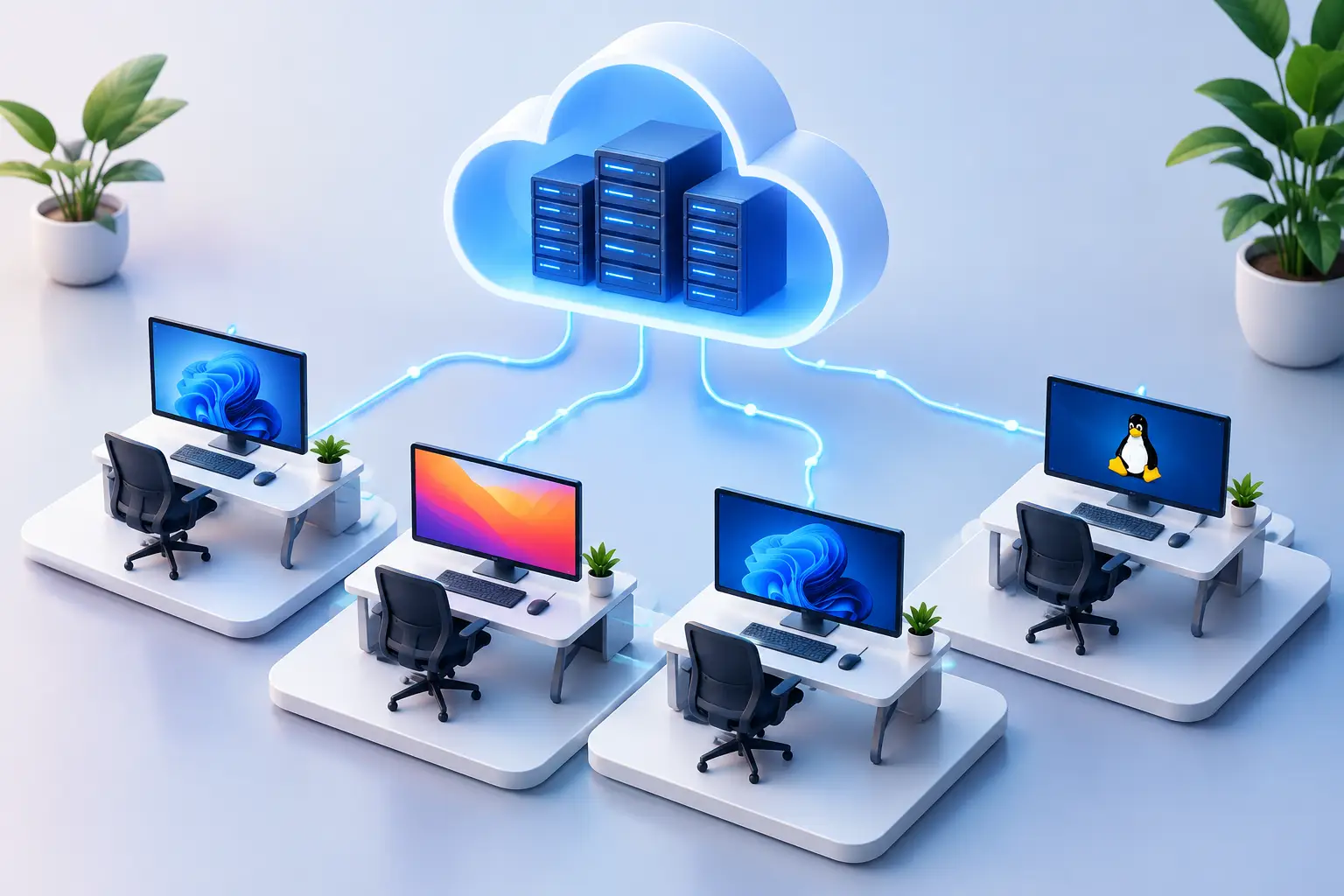
Gaming no longer depends entirely on the hardware sitting on a player’s desk. With modern cloud computing, users can access a powerful online gaming PC through an internet connection instead of purchasing and maintaining a high-end physical computer.
This approach has also made virtual desktop rental more accessible. A rented cloud computer can provide CPU, RAM, storage, and GPU resources remotely, allowing users to access a virtual PC from a compatible laptop, desktop, or other device.
What Is an Online Gaming PC?
An online gaming PC is a remote computer that provides the hardware and software resources needed to play supported PC games over the internet.
Instead of the game running completely on the user’s local machine, the gaming workload can be processed on a remote server. The resulting video is streamed back to the player’s device, while keyboard, mouse, or controller inputs are sent to the remote system.
A typical setup can include:
- A remote Windows environment
- Dedicated or virtual GPU resources
- CPU and RAM allocation
- Cloud storage
- Remote desktop access
- Game launcher support
- Internet-based game streaming
The exact experience depends on the provider, hardware configuration, server location, and quality of the user’s internet connection.
How Does a Cloud PC Work?
A cloud PC is essentially a computer hosted in a remote data center. Instead of purchasing the physical hardware, users access the computing environment remotely.
Cloud PCs can be configured for different purposes. Some are designed for general productivity, while others provide GPU resources for gaming, video editing, 3D applications, development, or other demanding workloads.
For gaming, the cloud computer needs appropriate GPU and CPU resources. Network performance is equally important because gameplay has to travel between the remote server and the user’s device.
Virtual Desktop Rental Explained
Virtual desktop rental allows users to access a remote desktop for a specified period or under a recurring plan.
Rather than buying a physical workstation, a user rents access to virtual computing infrastructure. The provider generally manages the underlying servers, networking, storage infrastructure, and physical hardware.
This model can be useful for people who:
- Need additional computing power temporarily
- Do not want to build a gaming PC
- Use multiple devices
- Need remote access to Windows applications
- Want to avoid physical hardware maintenance
- Require a GPU-powered remote computer
Rental models can vary significantly. Some providers charge monthly fees, while others may offer hourly or usage-based access.
Online Gaming PC vs. Local Gaming PC
The biggest difference between an online gaming PC and a traditional gaming computer is where the hardware is located.
With a local gaming PC, the GPU, CPU, storage, and other components are physically installed in the user’s system.
With an online gaming PC, those resources are hosted remotely.
| Feature | Local Gaming PC | Online Gaming PC |
|---|---|---|
| Hardware | Owned locally | Hosted remotely |
| GPU | User’s GPU | Provider’s GPU |
| Maintenance | User-managed | Provider-managed |
| Internet dependency | Lower | High |
| Portability | Hardware dependent | Accessible remotely |
| Upgrades | User purchases components | Provider-dependent |
| Initial hardware cost | Can be high | Potentially lower |
A local PC remains useful for gamers who want complete control and offline access. A cloud-based option can be attractive for users who prioritize flexibility.
Benefits of Renting a Virtual Desktop
Virtual desktop rental can provide several practical advantages.
Lower Hardware Commitment
Users do not necessarily need to purchase an expensive physical computer simply to access higher-performance computing resources.
Remote Accessibility
A virtual desktop can be accessed from compatible devices, making it useful for users who work or play from different locations.
Flexible Computing
A rented cloud PC can provide additional resources when needed without requiring a permanent hardware upgrade.
Reduced Maintenance
The cloud provider manages the physical infrastructure. Users generally do not need to worry about replacing a failed GPU, upgrading RAM, or maintaining server hardware.
What to Check Before Renting a Cloud PC
Not every virtual desktop is suitable for gaming. Before choosing a provider, consider several technical factors.
GPU
Gaming performance depends heavily on GPU capability. Check the graphics hardware or virtual GPU configuration rather than assuming every cloud PC is gaming-ready.
CPU and RAM
The processor and available memory can affect game performance, multitasking, and application responsiveness.
Storage
Modern PC games can require significant storage space. Make sure the cloud PC provides enough capacity for your games and applications.
Server Location
The distance between the user and the cloud server can influence latency. A geographically closer server may provide a more responsive experience, although network routing also matters.
Game Compatibility
Check whether the games, launchers, anti-cheat systems, and other software you intend to use are supported.
SensePC as a Cloud PC Option
SensePC provides cloud computing solutions for users who want access to remote PC resources without purchasing a physical high-performance machine.
For gaming use cases, SensePC offers cloud gaming PC configurations with GPU resources for supported games and workloads. Users can access their remote Windows environment from compatible devices rather than relying exclusively on local hardware.
The same cloud PC concept can also support workloads beyond gaming, depending on the selected configuration. Remote computing can be useful for productivity, software development, creative applications, and other resource-intensive tasks.
For someone considering virtual desktop rental, the important factors remain the same: available hardware, pricing, server location, compatibility, network performance, and the level of access provided.
Is a Cloud PC Good for Gaming?
A cloud PC can be a practical option for gamers who have a device with limited local hardware but a reliable internet connection.
However, cloud gaming is different from playing on a local machine. Network latency, connection stability, video compression, and server distance can affect responsiveness and visual quality.
Players who primarily enjoy single-player or less latency-sensitive games may find cloud gaming particularly convenient. Competitive players should test a provider from their location before committing to a long-term plan.
Choosing the Right Online Gaming PC
When comparing an online gaming PC, do not focus only on the advertised GPU. Look at the entire service.
Consider:
- Hardware — GPU, CPU, RAM, and storage.
- Latency — Server location and network routing.
- Compatibility — Games, launchers, and software.
- Pricing — Monthly, hourly, or usage-based options.
- Accessibility — Supported operating systems and devices.
- Support — Troubleshooting and technical assistance.
- Flexibility — Ability to upgrade or change configurations.
The right combination can make a cloud PC more practical than purchasing a new physical gaming computer.
Final Thoughts
An online gaming PC provides an alternative way to access powerful computing without keeping a high-end gaming machine at home. Through virtual desktop rental, users can access remote CPU, RAM, storage, and GPU resources according to their requirements.
A cloud PC can also extend beyond gaming, providing a flexible remote computing environment for work and other demanding applications.
SensePC is one option for users exploring cloud-based computing and remote gaming. Ultimately, the best solution depends on the games you play, your internet connection, required hardware, budget, and how much flexibility you want from your virtual desktop.
Tag:cloud pc, online gaming PC

You may also like