Why Digital Transformation Agencies Matter for Modern Businesses
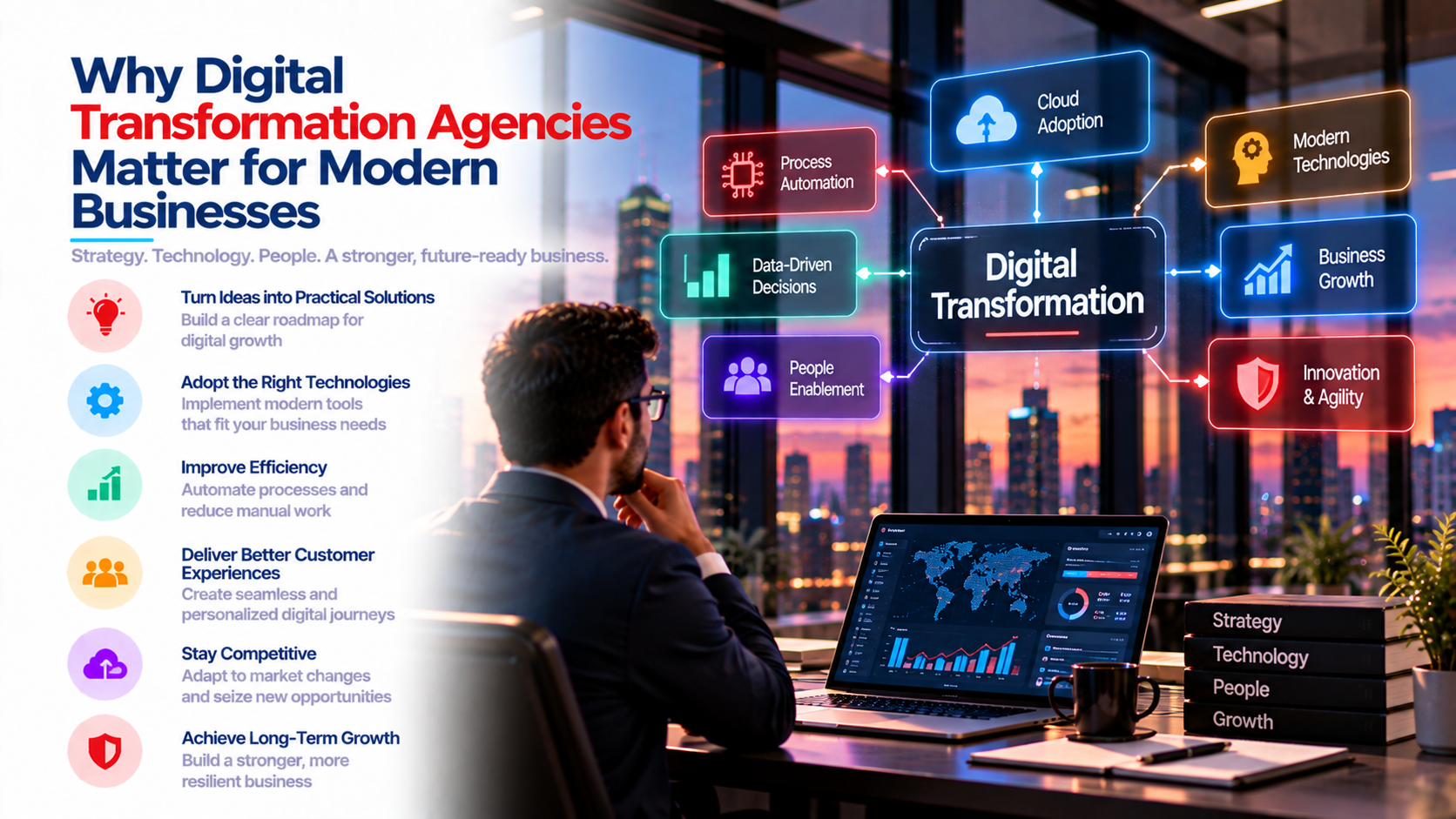
Modern businesses are under pressure to move faster, serve customers better, and keep up with changing technology. Traditional systems can make this difficult. Slow processes, disconnected software, and outdated customer journeys often hold companies back.
This is where digital transformation agencies become valuable. They help businesses rethink how technology is used across daily operations, customer service, data management, and business strategy. It is not simply about buying new software. It is about making the business work smarter.
For many companies, transformation starts with one small problem. Maybe customers are waiting too long for support, employees are entering the same information into different systems, or managers cannot get useful data quickly. A well-planned digital strategy can turn these problems into opportunities.
What Do Digital Transformation Agencies Actually Do?
Digital transformation agencies help organizations adopt technology in a practical and strategic way. They study existing processes, identify weaknesses, and recommend solutions that match business goals.
The work can include cloud adoption, automation, data analytics, software integration, artificial intelligence, cybersecurity, and customer experience improvements. The exact approach depends on the company and its industry.
A good agency does not recommend technology just because it is popular. That would be expensive and often useless. Instead, it asks a simple question: what problem are we trying to solve?
This business-first approach makes transformation more sustainable. Companies can invest in technology that delivers measurable value instead of collecting tools that nobody properly uses.
The Connection Between Digital Transformation and Customer Experience
Customers today expect convenience. They want fast answers, simple websites, smooth payments, personalized communication, and consistent service across different channels.
This is why digital transformation and customer experience are closely connected. When internal systems improve, customer interactions can improve too.
For example, an online retailer may connect its customer service platform with inventory and order management systems. A support agent can then see the customer’s order information without asking the customer to repeat everything.
Small improvements like this matter. Customers notice when a company makes things easy.
Why Customer Experience Digital Transformation Matters
Customer experience digital transformation focuses on using technology to improve every stage of the customer journey. It can involve websites, mobile applications, CRM systems, chatbots, marketing platforms, analytics, and automated communication.
Imagine a customer visiting a website at night with a simple question. Instead of waiting until morning, an intelligent support system can provide an immediate answer. If the issue requires a human employee, the conversation can be transferred with the relevant information already available.
That feels better for the customer. It also saves employee time.
Businesses can use customer data to understand buying behavior, common complaints, and service gaps. Over time, these insights help companies create experiences that feel more relevant rather than generic.
Improving Business Operations Through Technology
Transformation is not only about customers. Employees also need better systems.
Many businesses still depend on repetitive manual tasks. Data may be copied between spreadsheets, emails, and separate applications. These processes consume time and create opportunities for mistakes.
Digital transformation can automate routine work and connect disconnected systems. Employees spend less time doing repetitive tasks and more time solving problems that actually require human thinking.
Cloud platforms can also make collaboration easier. Teams can access information from different locations while managers gain better visibility into operations.
This is especially useful for growing businesses. As a company expands, manual processes become harder to manage. Technology provides the structure needed to scale without creating unnecessary complexity.
The Role of Data and Analytics
Data is one of the most valuable assets a modern organization has, but raw data alone does not create business value.
Digital transformation agencies can help companies organize information and turn it into useful insights. Analytics platforms can reveal sales patterns, customer behavior, operational problems, and performance trends.
For example, a company may discover that customers abandon a purchasing process at a specific stage. Instead of guessing why, management can examine the data and test improvements.
This is where advanced analytics, cloud data services, and master data management solutions can support better decision-making.
Connecting Digital Transformation With Other IT Services
Successful transformation usually involves several technologies working together. A company might need cloud infrastructure, software development, cybersecurity, data services, automation, and reliable technical support.
For businesses operating in Pakistan, related services such as best ssd storage server can also support faster software deployment and better collaboration between development and operations teams.
The important thing is integration. A collection of separate technologies is not a transformation strategy.
A strong technology environment should work as one connected system. Otherwise, businesses can end up replacing one problem with another.
Why Businesses Should Work With Experienced Agencies
Digital transformation can become expensive when decisions are made without proper planning. An experienced agency brings technical knowledge as well as an outside perspective.
The right partner can identify unnecessary processes, recommend suitable platforms, plan implementation, and help employees adapt to new systems.
Experience matters here. A technology solution that works perfectly for one organization may be completely wrong for another.
Agencies also understand that transformation is not finished when new software goes live. Employees need training, systems require monitoring, and customer feedback should continue to shape improvements.
How to Choose the Right Digital Transformation Partner
Businesses should look beyond a company’s list of technologies. Ask about previous projects, industry experience, implementation methods, communication, security practices, and ongoing support.
It is also useful to understand how the agency measures success. Reduced costs, faster operations, higher customer satisfaction, better conversion rates, and improved employee productivity are all possible indicators.
A good partner should be willing to explain its recommendations clearly. If the solution sounds unnecessarily complicated, ask why.
The best transformation strategy is usually the one that solves real problems without creating new ones.
The Future of Digital Business
Technology will continue changing quickly. Artificial intelligence, automation, cloud computing, analytics, and connected applications will become even more important.
Businesses that build a flexible technology foundation will have an easier time adapting. Those relying heavily on outdated systems may find future changes more difficult and expensive.
That does not mean every company needs to adopt every new technology. Smart transformation is selective. It focuses on useful innovation rather than following trends.
Conclusion
Digital transformation is now a practical business requirement, not just a technology trend. Digital transformation agencies help companies modernize operations, improve decision-making, connect systems, and create better customer journeys.
The relationship between digital transformation and customer experience is especially important because better internal processes often lead to better customer interactions. From automation and cloud platforms to analytics and customer experience digital transformation, the right technology can create meaningful improvements.
For businesses looking for long-term growth, choosing an experienced technology partner can make the journey more manageable. Chromeis can help businesses explore modern technology solutions based on their operational and customer needs. Transformation takes time, but with the right strategy, the results can be worth it.
FAQs
1. What are digital transformation agencies?
Digital transformation agencies help businesses adopt and integrate modern technologies to improve operations, customer experience, productivity, and decision-making. Their services can include cloud computing, automation, analytics, software integration, and digital strategy.
2. How does digital transformation improve customer experience?
Digital transformation can make customer interactions faster and more convenient. Businesses can use CRM platforms, automation, analytics, mobile applications, and connected systems to provide more consistent and personalized services.
3. Why are digital transformation and customer experience connected?
Internal business systems directly affect how customers are served. When employees have faster access to accurate information and repetitive processes are automated, companies can respond to customers more efficiently.
4. Is customer experience digital transformation useful for small businesses?
Yes. Small businesses can use digital tools to automate routine work, improve communication, understand customers, and compete with larger organizations. The key is choosing solutions that match the company’s actual needs and budget.
5. How should a business choose a digital transformation agency?
A business should review the agency’s experience, technical capabilities, previous projects, communication process, security approach, and ongoing support. It should also choose a partner that understands business objectives instead of focusing only on technology.