Get Custom Display Boxes That Make Products Stand Out
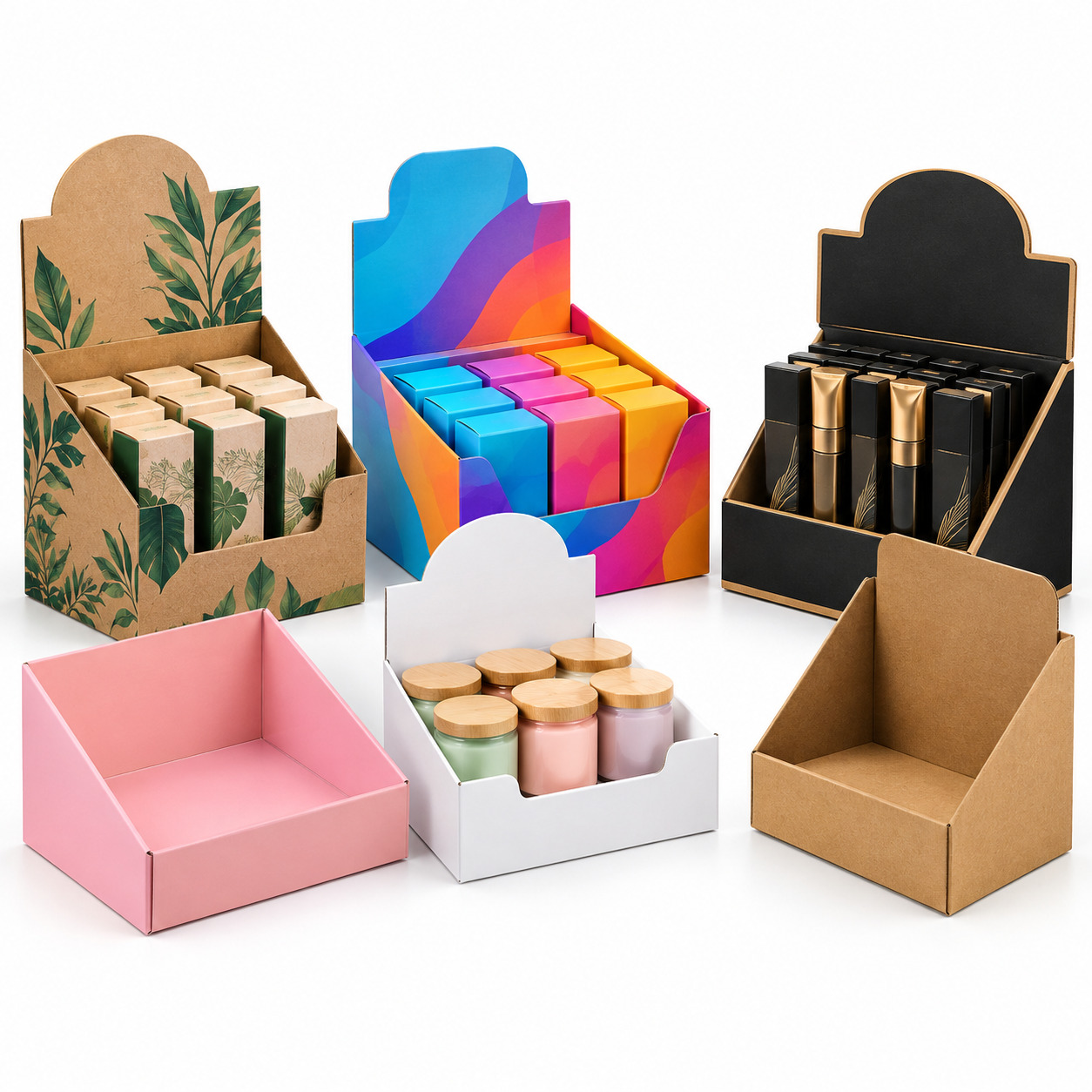
When products are placed on a busy retail shelf or counter, presentation can make a big difference. Customers often see the packaging before they pick up the product, so a well-planned display can help create a stronger first impression.
Custom Display Boxes are designed to hold and present products in a visible, organised way. Unlike standard product boxes, display packaging can be created around the retail environment, product size, number of units, and the way customers interact with the products. Countertop, shelf-ready, window, and floor display formats are among the common options used in retail settings.
Whether you sell cosmetics, food products, candles, CBD items, accessories, snacks, or small retail goods, a purpose-built display box can combine product presentation with practical storage.
What Are Custom Display Boxes Used For?
Display boxes are made to showcase products while keeping them organised. They can sit on counters, shelves, checkout areas, or other retail spaces.
A typical display can hold several units of the same product, making it easier for customers to see the available items. Some designs feature an open front, while others use a cut-out window or raised header to make the product and branding more visible.
The structure can also be planned around how the products will be placed inside. This is important because a display needs to remain stable as products are removed throughout the day.
Why Are Display Boxes Important for Retail Products?
A standard box mainly focuses on containing the product. A display box has an additional job: presenting the product in a way that’s easy to notice and access.
A well-designed display can give products a defined space on a shelf or counter instead of leaving individual packages scattered around. It can also provide room for product names, branding, key details, and other information customers may need.
For small products, especially those suited to impulse purchases, a compact counter display can place several units within easy reach. Larger products or bigger collections may benefit from a floor-standing structure. Different formats are designed around different retail environments.
Which Types of Display Boxes Can You Choose?
The right display structure depends on where the products will be placed and how much space is available.
Countertop Display Boxes
Countertop displays are compact and designed to sit on a flat surface. They’re useful for checkout areas, service counters, reception desks, and small retail spaces.
These displays can work well for cosmetics, confectionery, accessories, small bottles, and other lightweight products.
Shelf-Ready Display Boxes
Shelf-ready packaging is designed to move from shipping or storage into the retail environment with minimal setup. Some designs include perforated sections that can be removed to reveal the products inside.
This can make stocking more straightforward because the display arrives as an organised unit rather than requiring every product to be arranged separately.
Window Display Boxes
A window gives customers a direct view of the product without requiring them to open the package.
This can be useful when the product itself has a strong visual appeal. A clear window can reveal the colour, shape, texture, or arrangement of the product while the printed box provides supporting information.
Floor Display Boxes
Floor displays provide more space and can accommodate larger quantities of products. They’re useful for seasonal collections, promotional campaigns, new product launches, and products that need more visibility within a retail area.
Because floor displays carry more products and occupy more space, the structure needs to be planned carefully around product weight and stability.
How Can Custom Sizes Improve Product Display?
A display box shouldn’t simply be large enough to hold the products. Its dimensions should be planned around the actual product size, quantity, retail location, and desired arrangement.
A display that’s too deep may make products difficult to reach. If it’s too narrow, the products may appear crowded. A well-planned structure gives each product enough room while making efficient use of the available retail space.
Custom sizing also allows the display to fit a particular counter, shelf, or merchandising area. This can be especially useful when retailers have strict space requirements.
What Materials Work Best for Display Packaging?
The material should match the weight of the products and the type of display you’re creating.
Paperboard is commonly used for lightweight products and countertop displays because it provides a smooth surface for detailed printing. Corrugated board can provide additional structural support for larger displays or heavier products.
The choice isn’t only about strength. Material thickness, folding structure, product weight, shipping conditions, and the expected time the display will remain in the store can all influence the final specification.
Can Display Boxes Include Inserts and Dividers?
Yes. Inserts and dividers can make a display more organised, particularly when several products need to be separated.
For example, a cosmetic display may need individual spaces for different products, while a bottle display may require holders to prevent the products from falling over.
Dividers can also separate different variants, flavours, colours, or sizes. This helps maintain a neat appearance as customers remove individual products.
The internal structure should be designed around the actual product dimensions so that the items remain secure without making them difficult to remove.
How Can Custom Printing Improve a Product Display?
Printing gives the display a large area for branding and product information.
The header, front panel, side panels, and other visible sections can be used for your logo, product name, graphics, key features, flavour names, or other relevant information.
A strong display design doesn’t need to be overloaded with text. Clear product identification and well-positioned graphics can make the display easier to understand at a glance.
You can also create a consistent design across several display formats so your products have a recognisable appearance throughout the store.
Which Finishes Can Be Used on Display Boxes?
Finishing options can add another layer to the appearance of retail displays.
Depending on the material and printing process, options can include matte finishes, gloss finishes, foil details, embossing, debossing, and spot effects.
A matte surface can provide a more refined appearance, while gloss can make selected areas stand out. Foil details may be suitable for premium products where you want to highlight a logo or specific design element.
The best finish depends on the product category and overall packaging design.
Can Display Boxes Be Used for Different Products?
Absolutely. Display packaging can be designed for a wide range of retail products.
Common applications include:
- Cosmetics and skincare
- Candles
- CBD products
- Snacks and confectionery
- Small food products
- Health and wellness items
- Accessories
- Electronics accessories
- Gift products
- Bottles and jars
- Seasonal products
- Promotional merchandise
Each product category may require a different structure. A lightweight packet can use a simple countertop tray, while heavier bottles may require stronger board and additional support.
How Can Display Packaging Help With Retail Organisation?
Keeping products organised is just as important as making them look attractive.
A structured display gives each product a defined position. This makes it easier for customers to pick up an item and for staff to restock the display when products sell.
Shelf-ready formats can also reduce the amount of individual product arrangement required in some retail environments. The display arrives as a merchandising unit and can be placed directly into its intended position.
This combination of presentation and practical organisation makes display packaging useful for both brands and retailers.
Where Can You Get Custom Display Packaging?
If you need retail packaging designed around your products, The Printed Packaging can provide custom packaging options based on product dimensions, display requirements, printing, and finishing preferences.
Before requesting packaging, it’s useful to know where the display will be positioned, how many products it needs to hold, the approximate product weight, and how the display will be transported and restocked.
These details can help determine the appropriate box style and material.
What Should You Consider Before Ordering Display Boxes?
Start with the product. Measure its height, width, depth, and weight, then decide how many units should fit inside the display.
Next, consider the retail location. A countertop display has different requirements from a floor-standing unit or shelf-ready tray.
Think about how customers will access the products, how staff will refill the display, and how much branding needs to be visible from the front and sides.
It’s also worth considering the shipping process. The display may need to travel flat, arrive pre-assembled, or convert from a shipping structure into a retail display.
Why Choose Display Boxes Designed Around Your Products?
Every retail product has different display requirements. A custom structure gives you more control over the size, material, product arrangement, branding, and overall presentation.
From a small counter unit to a larger floor display, the right format can help keep products organised while giving them a clear and professional presence.
With suitable materials, accurate dimensions, practical internal support, and well-planned printing, display packaging can become an important part of how your products are presented from the moment they reach the store. Read more: Custom Boxes in uk