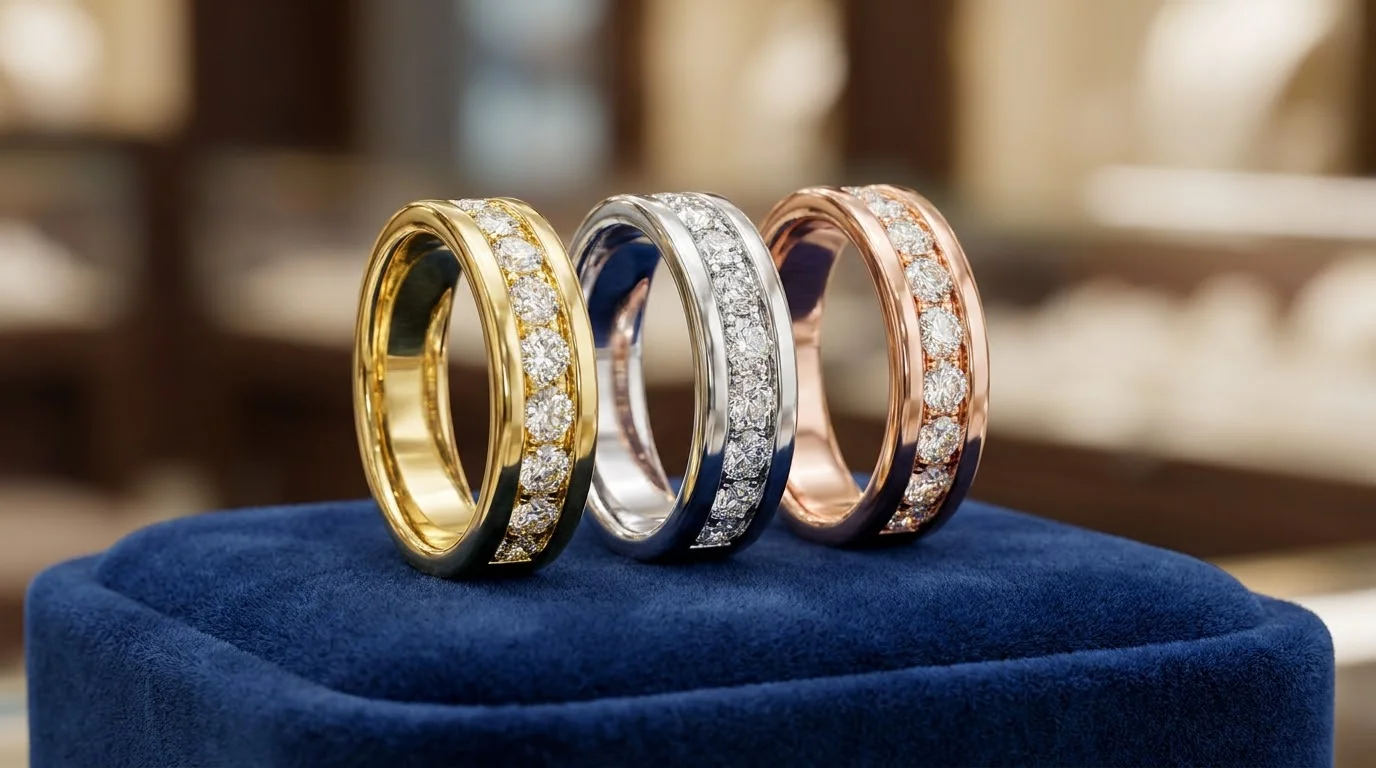
How Are Tungsten Rings Made and Finished for Jewelry
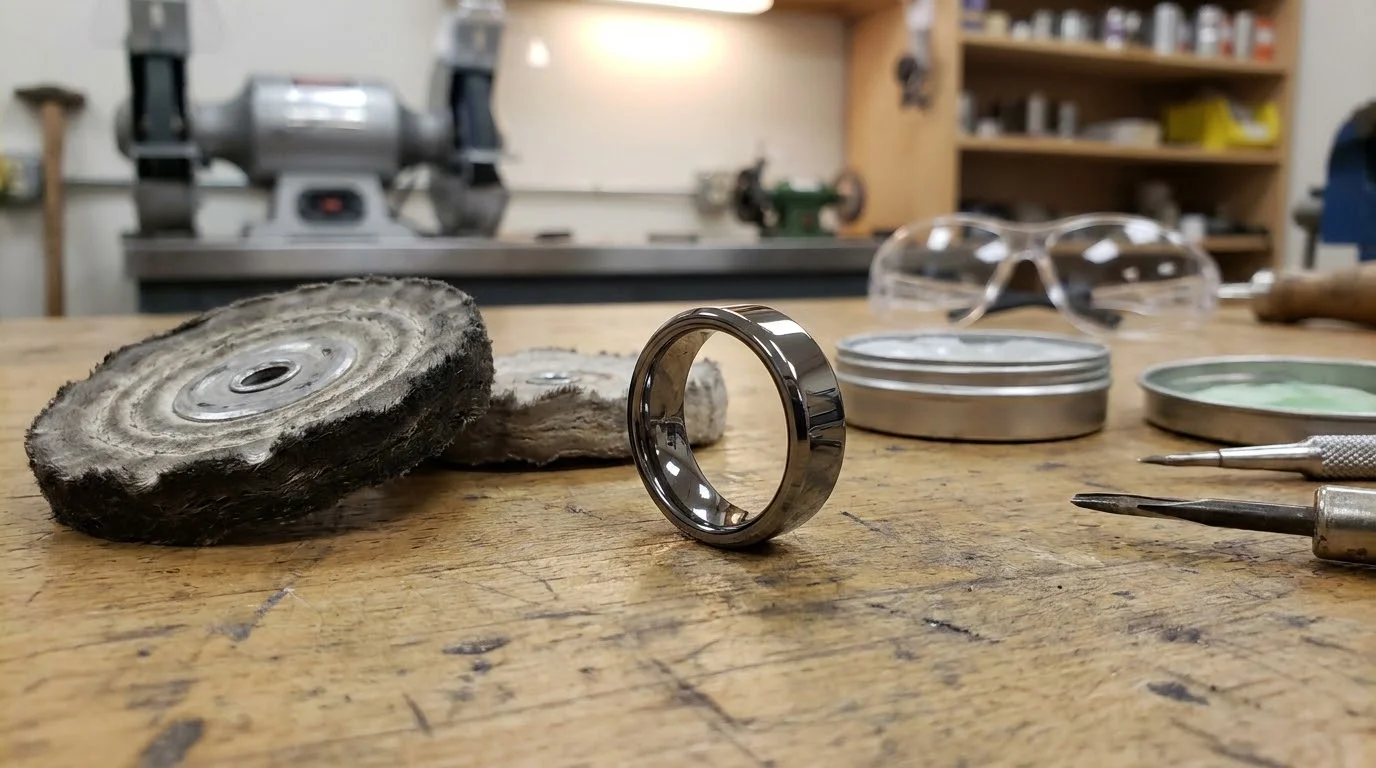
Most people who buy a tungsten ring give zero thought to how it was made. They see a hard, dark band in a case, like the price, and that’s the end of the decision. But tungsten rings go through a production process that has almost nothing in common with how gold or silver jewelry is made—and if you understand the process, the durability, the weight, the inability to resize, and the price all start making sense in a way that no product description quite manages to explain.
Why Tungsten Rings Can’t Be Made the Traditional Way
What jewelry sellers call “tungsten” is almost always tungsten carbide, which is a compound of tungsten metal and carbon; it kind of sits around 9 to 9.5 on the Mohs hardness scale. It’s tougher than most gemstones, and I figure that’s part of why people grab these rings in the first place, not just for appearance. It also explains why it can’t be made the same way a jeweler would shape a gold band.
Tungsten carbide melts at temps way beyond what any typical jeweler’s torch can reach. Casting it into a mold like goldsmiths have been doing for centuries just isn’t workable. So manufacturers lean on powder metallurgy instead; this is a sintering approach that’s borrowed from industrial tooling and then adapted for jewelry use. It can take longer, it needs more specific gear, and it requires almost finicky controls. In the end you get a ring that resists that kind of scratching that would quickly dull up gold or platinum after a week of normal wear, you know, everyday life stuff.
Starting with Powder: Pressing and Sintering
The whole thing begins with fine powder. Tungsten metal and carbon are weighed out and blended in exact proportions, along with a small amount of binder metal. Most reputable manufacturers use nickel as the binder. Cheaper producers sometimes use cobalt instead—and that matters, because cobalt can leach out with prolonged skin contact, leaving dark stains and occasionally causing a skin reaction. It’s one of the few places where the quality gap between a $30 tungsten ring and a well-made one actually shows up in daily wear.
Once the powder is mixed, it gets pressed under high pressure into a rough ring-shaped blank. At this point it looks vaguely like a ring but is still porous and fragile. The furnace changes that. The blank fires in a vacuum kiln at around 2,400 degrees Celsius in an oxygen-free environment that causes the binder metal to liquefy and flow between the solid carbide particles, fusing everything into a dense, non-porous structure.
One side effect of this process catches a lot of buyers off guard: the ring shrinks during sintering, sometimes by close to 20 percent. Manufacturers account for that shrinkage when cutting molds—and because of it, every ring size requires its own individual mold. There’s no adjusting after the fact. The dimensions are locked in at the mold stage, which is also why a tungsten ring can’t be resized later. The structure is permanent once sintered.
Shaping and Grinding with Diamond Tools
After sintering, the blank is solid tungsten carbide but still unfinished. The bore has to be ground to exact dimensions, the exterior needs profiling, and any design features—bevels, grooves, inlay channels—have to be cut in. Diamond-coated tools are the only option. No standard metal-cutting equipment makes a dent in tungsten carbide’s surface, so every stage of shaping uses diamond abrasives and grinding wheels running at high speed.
Inlay channels get cut here too if the design calls for them. The groove has to be exactly the right width and depth because the tungsten can’t flex to accommodate a loose fit. Wood, carbon fiber, meteorite, gold strip—whatever the inlay material—has to sit cleanly in a channel that was ground to precise spec. The overall process is closer to cutting a gemstone than machining a metal component, and the equipment reflects that.
Polishing and Surface Finishing for Tungsten Rings
Polishing runs through several stages, each using progressively finer diamond compounds until the surface reaches the mirror finish tungsten is known for. That finish, once achieved, stays. Unlike gold or silver that dulls and picks up fine scratches from everyday contact, tungsten carbide holds its polish for years without any maintenance beyond occasional cleaning.
Not all rings end up high-gloss. Brushed and satin finishes are made by running the surface against a fine abrasive in one consistent direction, producing a softer, more diffused look. Hammered and sandblasted textures are also common and have a following among buyers who find the mirror finish too formal. Black rings go through an additional step: ion plating, or PVD coating, which uses a vacuum chamber to deposit a thin, hard layer onto the surface. The black color from this process is deep and even, though it is worth noting that the PVD layer itself—unlike the carbide beneath it—can show scratching under hard impact, revealing the silver-gray base underneath.
Inlays, Laser Engraving, and Final Finishing
Rings with inlays get the inlay material set into the channel at this stage. The fit has to be right from the start. Unlike a bezel setting in gold that can be pressed down over a stone, tungsten doesn’t bend—so the channel dimensions do all the work of holding the inlay securely.
Engraving is done entirely by laser, kind of. Tungsten’s hardness kind of rules out doing it by hand engraving or even mechanical scribing, so you use a high-powered laser, and it cuts the text or the pattern straight into the surface. The lines come out clean and precise, and the engraving doesn’t get worn down the same way a shallow mechanical cut might over years of constant use. This part is basically the last step before inspection and packaging.
From start to finish, making a tungsten ring takes several days, and yeah, it’s considerably longer than casting a precious metal band. That timing exists because the process is genuinely difficult, not because the ring is being put together slowly by hand, like some myth. The outcome speaks for itself on how durable it is. If you’re picking a ring that won’t need polishing appointments, won’t wander out of round, and won’t collect obvious scratches after a year of daily wear, then knowing what goes into making tungsten rings helps explain why it performs the way it does.

You may also like
What Makes Thomas Earnshaw Watches Stand Out in Design